Celia Vasquez Yui
Born in 1960 lives and works in a region of the Peruvian Amazon.
Celia Vasquez Yui is an artist, indigenous rights activist and political representative of the Shipibo People of Peru.
Artwork
Exhibitions
Celia Vasquez Yui
Celia Vasquez Yui
Biography
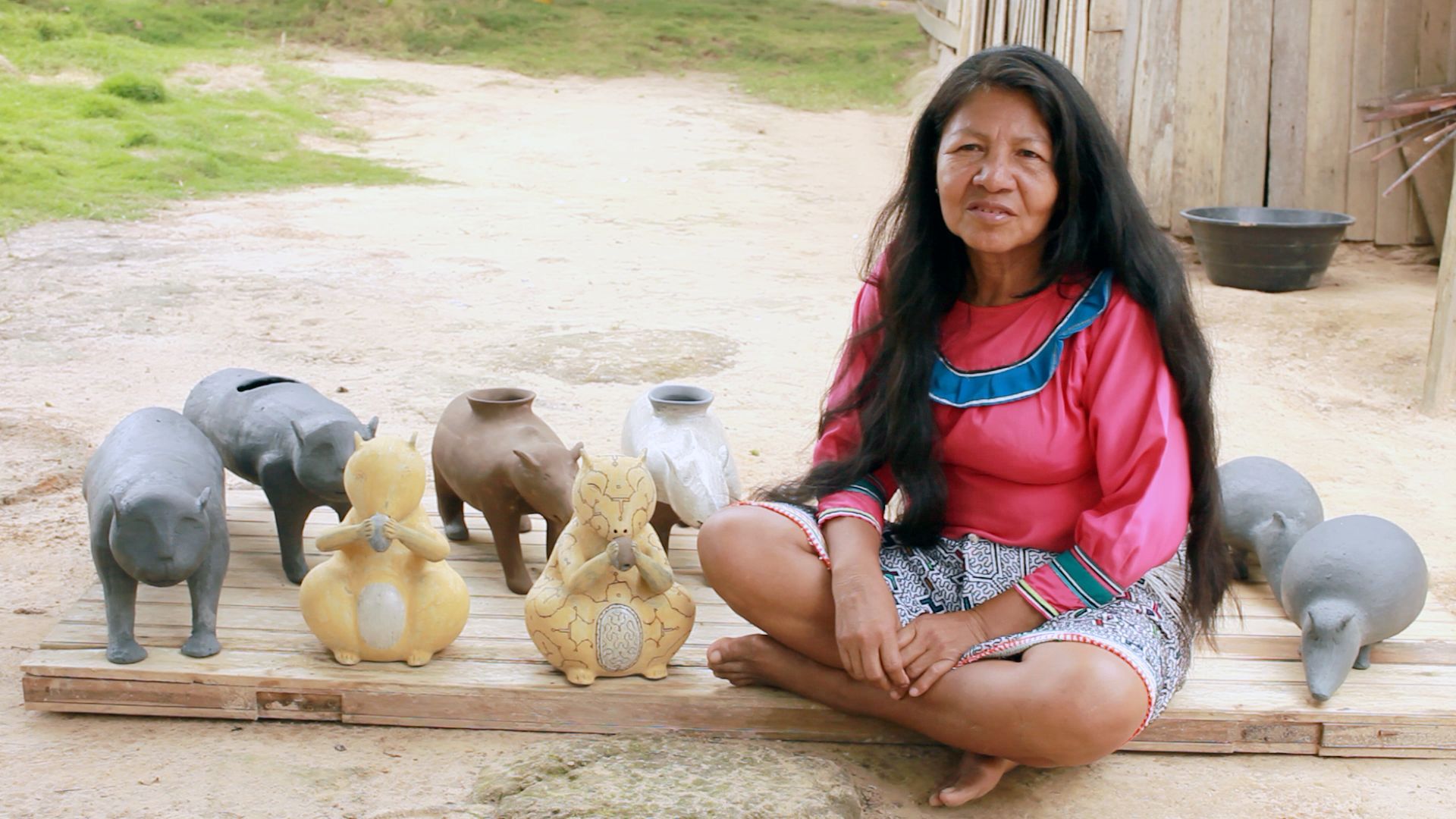
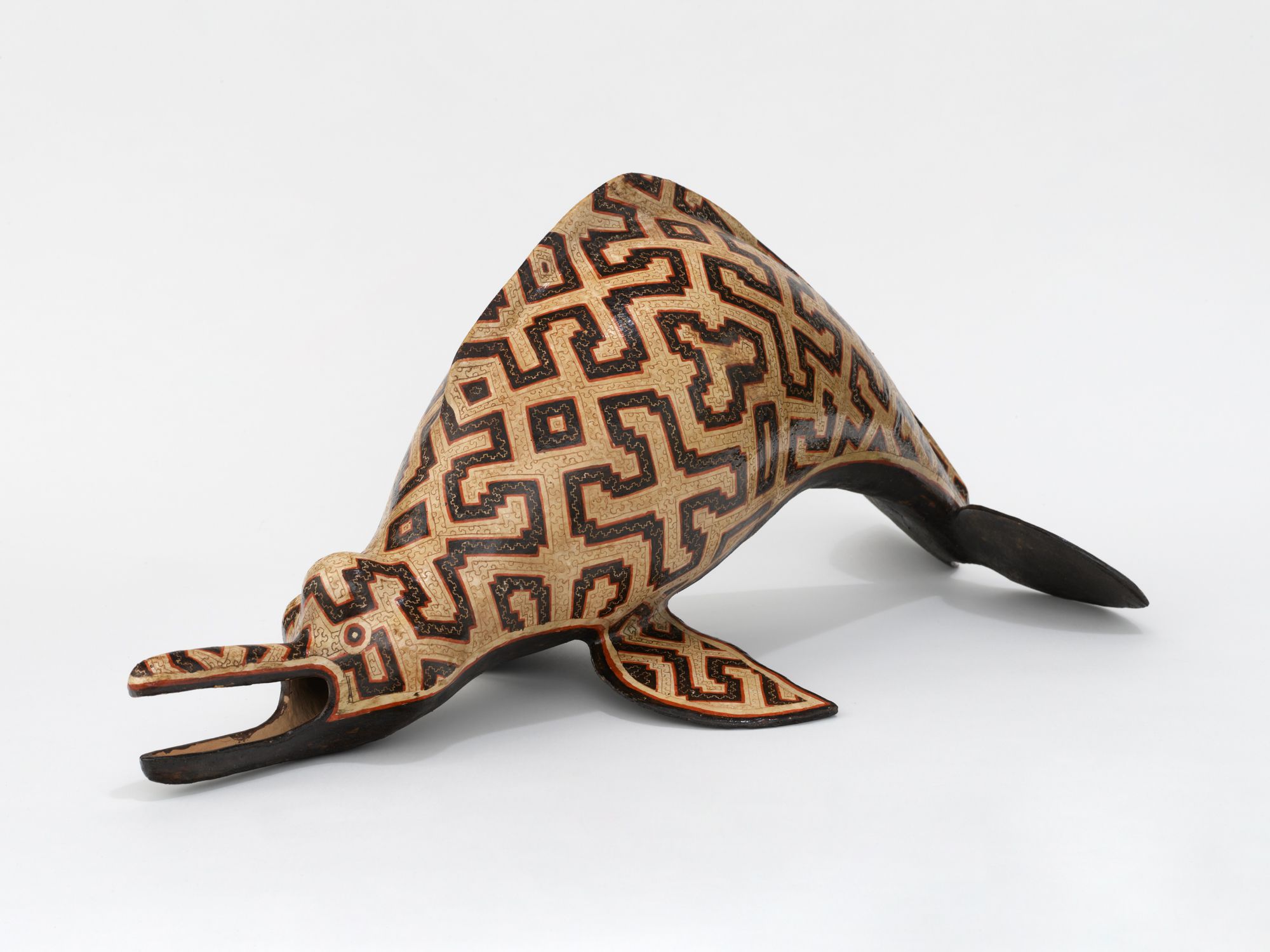
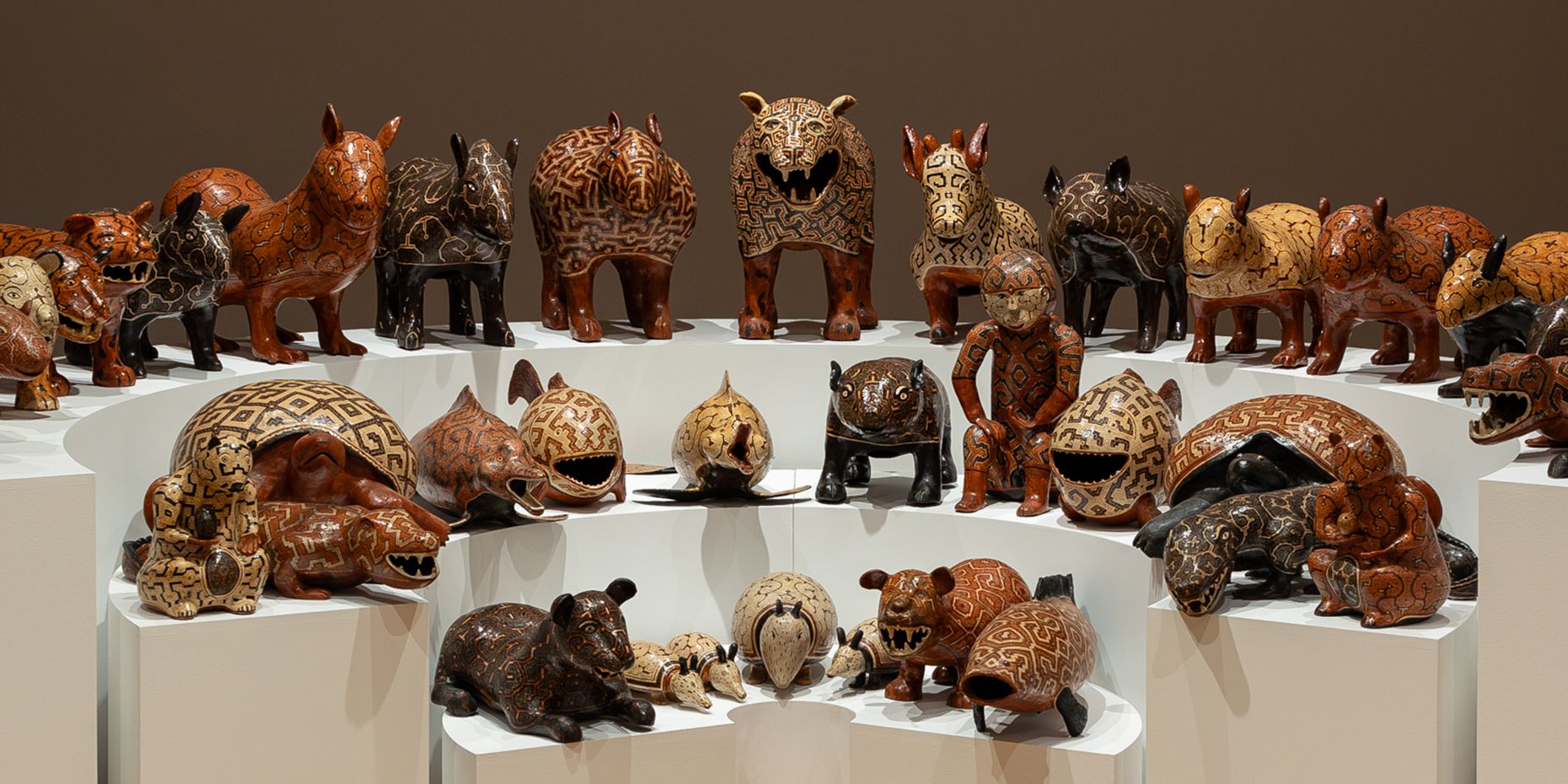
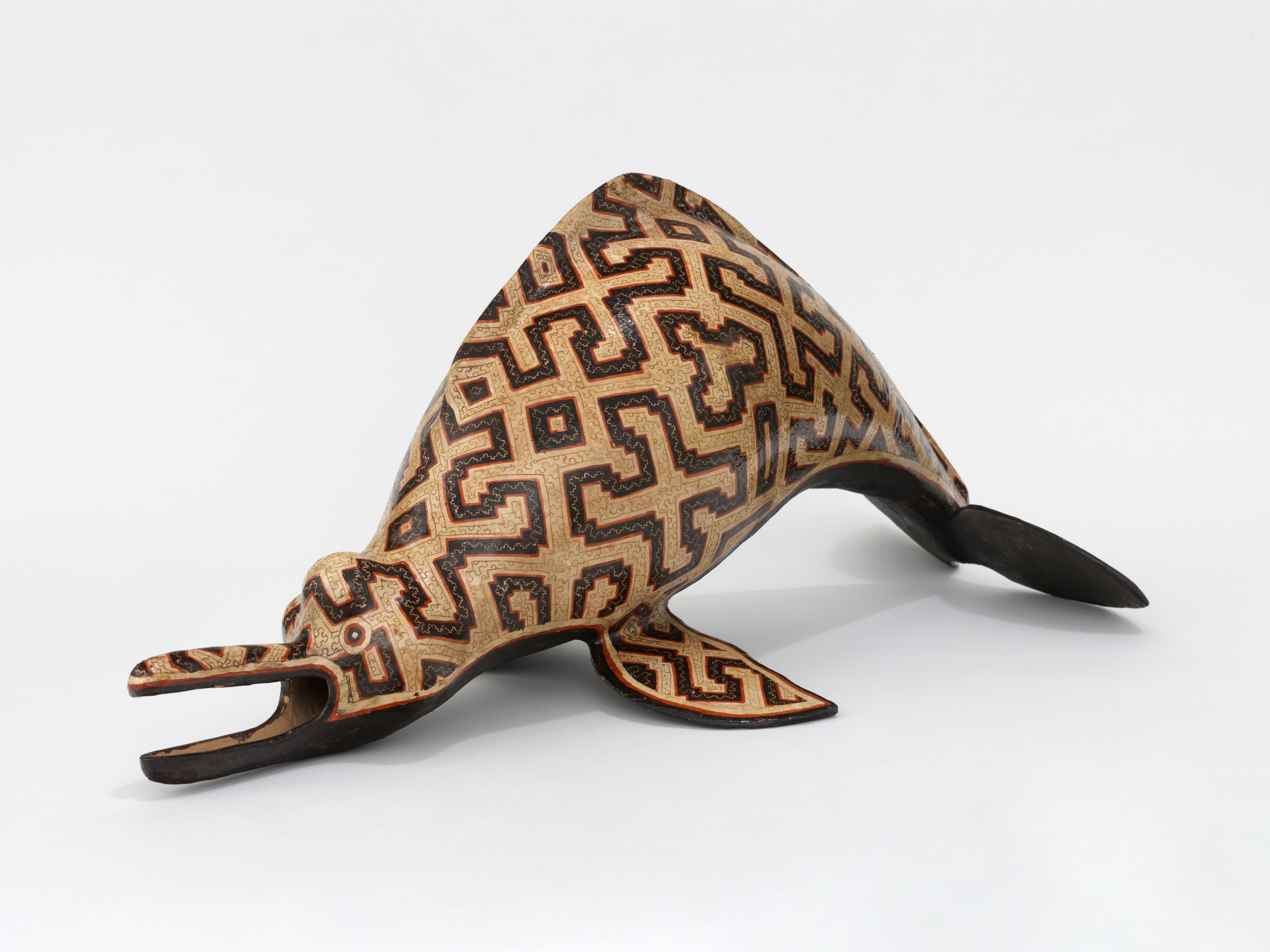
Celia Vasquez Yui is an artist, Indigenous rights activist, and political representative of the Shipibo-Conibo People of Peru. Born in the Amazonian city of Pucallpa in 1960, she began creating alongside her mother, an eminent ceramicist and descendant of the polychrome horizon cultures, whose archeological record throughout the Amazon dates back thousands of years. Balancing a cultural imperative for inventiveness with the constraints of traditional style, Vasquez Yui has distinguished her practice through astonishing creative innovations, exploring and expanding the zoomorphic features of the style. Not only does Vasquez Yui often work alongside her daughter Diana Ruiz Vasquez—an intergenerational collaboration that adds another expansive dimension to the work through which two bodies and two minds merge to finish each other’s designs—but she also has the custom to cut off a lock of hair from the head of her youngest apprentice in order to make from scratch the paint brushes of different sizes she uses to paint the designs. This way, her kené pathways channel into a pledge for the future too.
From 2023 through 2024, the artist was the subject of a solo traveling exhibition, The Council of the Mother Spirit of the Animals, which began at Salon 94, New York (NY) and traveled to the Johnson Museum of Art, Cornell University, Itaca (NY). At Salon 94, the exhibition was named one of the best exhibitions of the year by The New Yorker.
Vasquez Yui’s work is collected by numerous private and institutional collections, including The Art Institute of Chicago (IL); and The Ruth and Elmer Wellin Museum of Art, Hamilton College (NY), among others.
In 2007 the artist was elected President of the Professional Association of Sculptors of the Ucayali region of Peru.
Press
Mold
The New Yorker
The Art Newspaper
The New York Times