Sawako Goda Rosetta Galaxy
Installation Views
Artwork
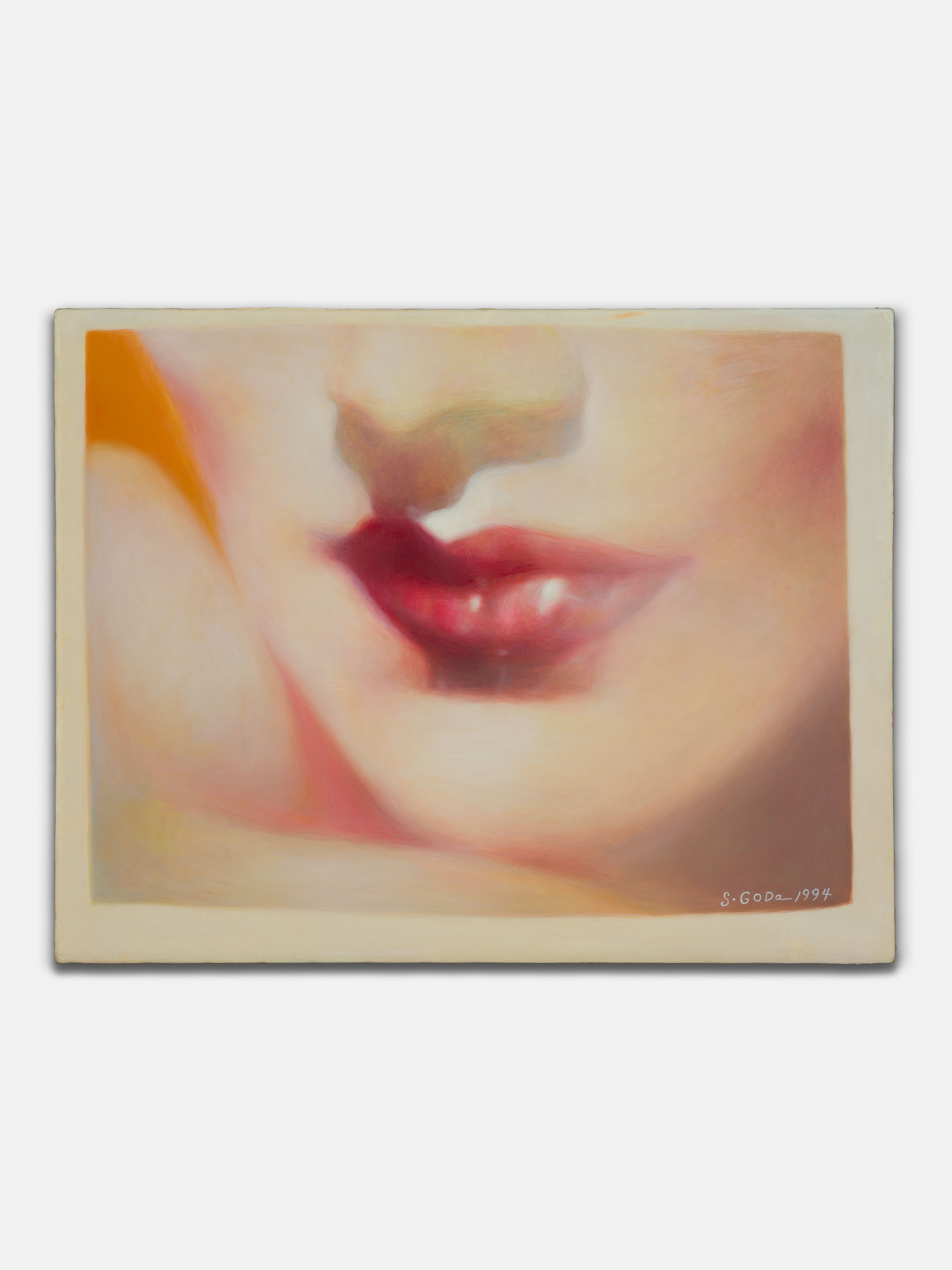
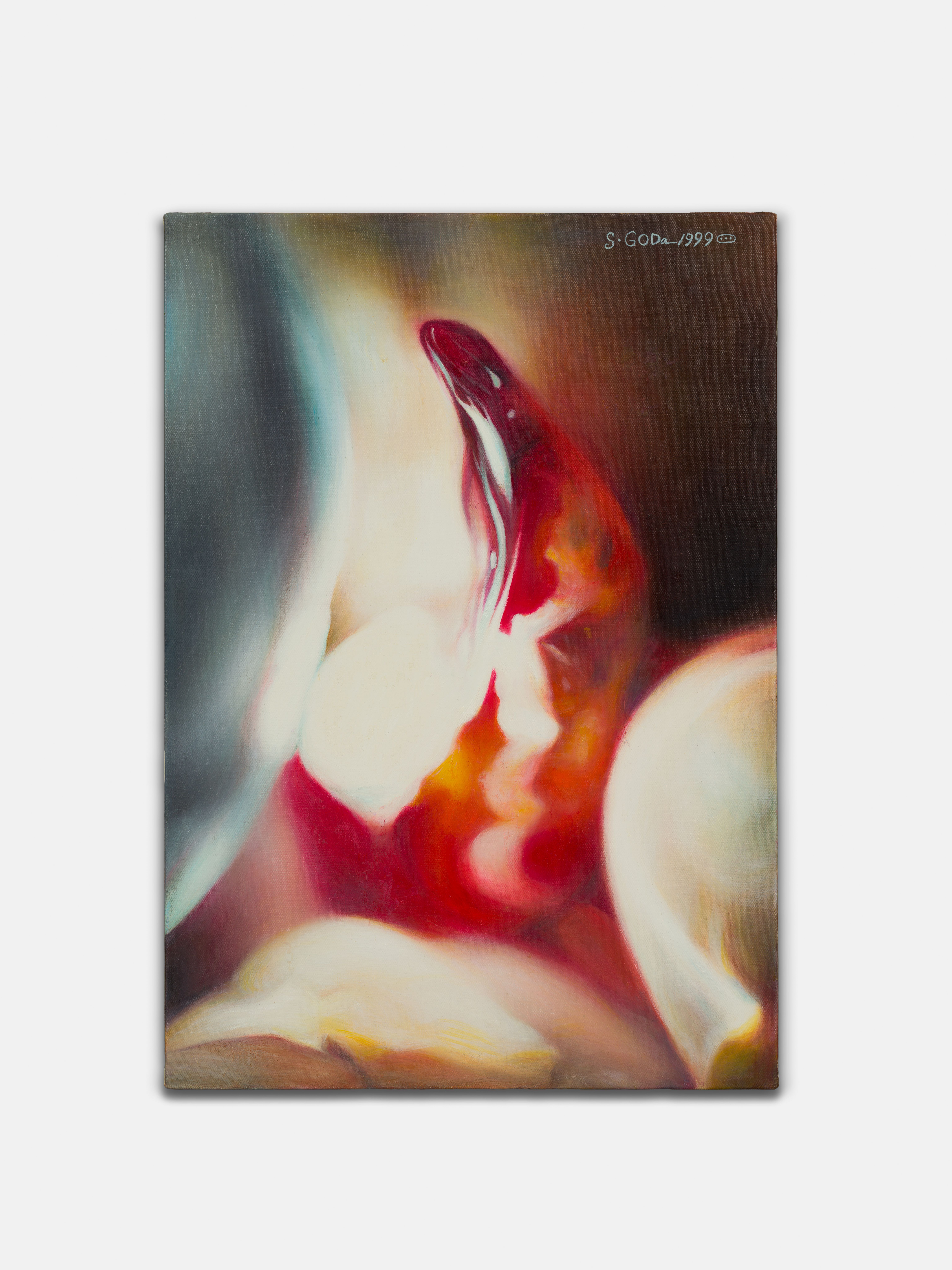
Salon 94 Paris is pleased to present Rosetta Galaxy, the first solo exhibition in Europe of Japanese artist Sawako Goda (1940–2016). Bringing together late oil paintings from the 90’s and early 2000’s as well as a suite of chromogenic prints made in the early 1990s, the exhibition offers a first encounter with one of the most singular figures of the Japanese avant-garde, an artist who traversed many aspects of Japan’s postwar vanguard.
Born in Kōchi City, Japan in 1940, Sawako Goda’s early life was one profoundly shaped by conflict. Her father was drafted into the armed forces as the country entered the Second World War in 1941, and the family moved to Kure City, Hiroshima Prefecture. Shortly after two devastating atomic detonations forced Japanese surrender, they returned to a desolate Kōchi City. In the summer of 1958, Goda relocated to Tokyo where she began her formal art education at Ochanomizu Art Academy. Here, whilst supporting herself with part-time work in magazine illustration and advertisement design, she began creating assemblages fashioned from an eclectic mix of debris scavenged from the streets around her. From her earliest childhood years, Goda had been captivated by the material remnants of wartime destruction. Particularly fascinated by objects that had been degraded and transformed beyond all recognition, she collected shards of metal, strips of wire and melted fragments of glass she found amidst the ruins of a city devastated by years of relentless aerial bombardment. These she twisted into strange and eerie doll-like forms that poignantly evoke national sentiments of annihilation and loss. They were, as she later described them, ‘objects of disaster as seen through the narrow perspective of a child’ and ‘a direct reflection of the landscape of the post-war devastation’.
Around 1964, Goda met the critic, Surrealist poet and artist Shūzō Takiguchi. With his support and encouragement, she staged her debut solo exhibition at Ginbōdō Gallery in Ginza, Tokyo in June 1965 where she showed a number of assemblages. She also spent a formative period in New York City in 1971, living in an apartment in the Westbeth Artists Housing complex with her second husband Tomio Miki: an artist, Rockefeller Fellow and close contemporary of Yayoi Kusama. During her time in New York, Goda scoured local antique shops and began collecting old magazines and vintage photographs. She also amassed exhibition publications, including the Museum of Modern Art’s catalogue of photographer E.J. Bellocq’s Storyville Portraits, which depicted women from the red-light district of early twentieth century New Orleans.
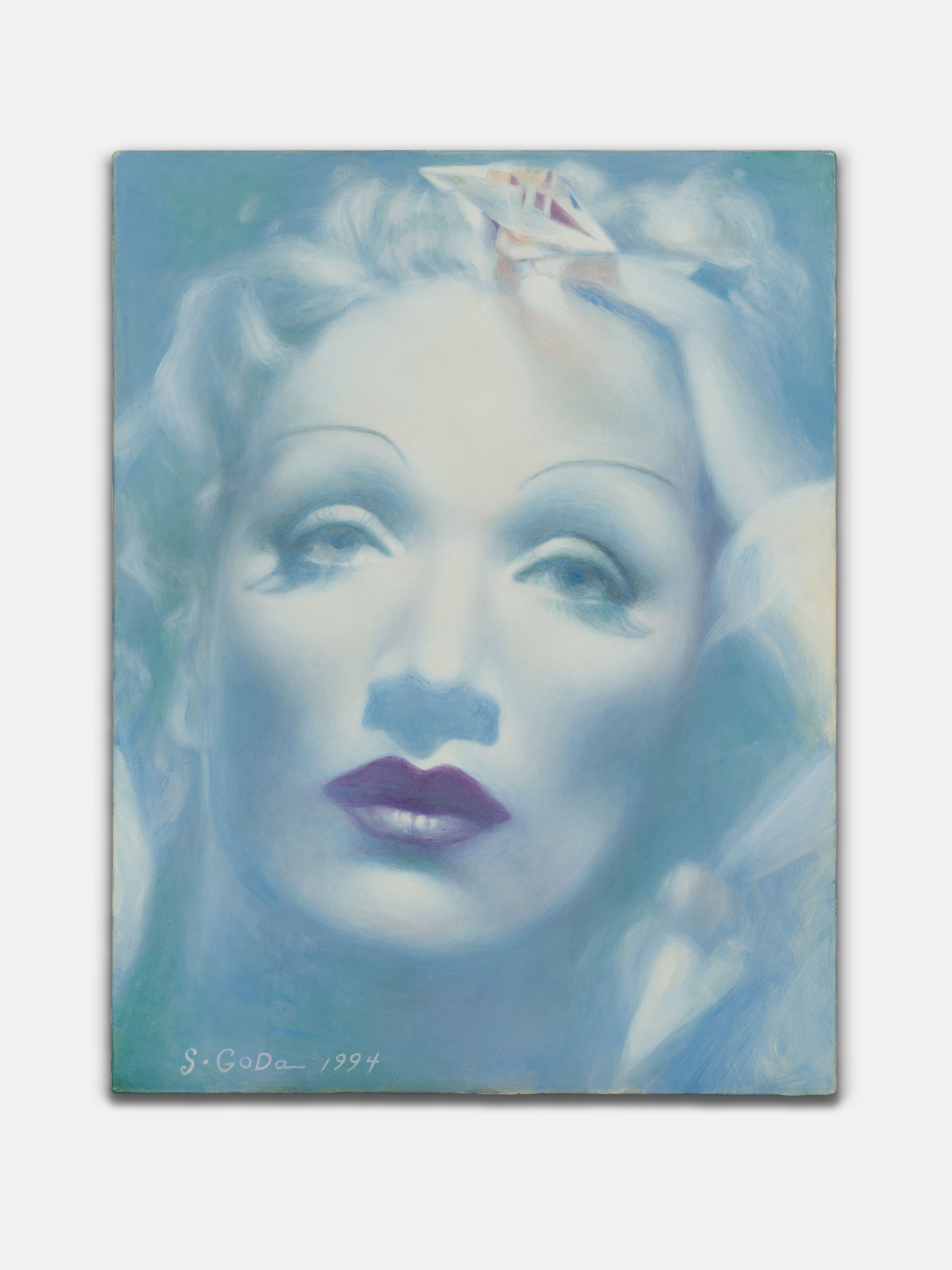
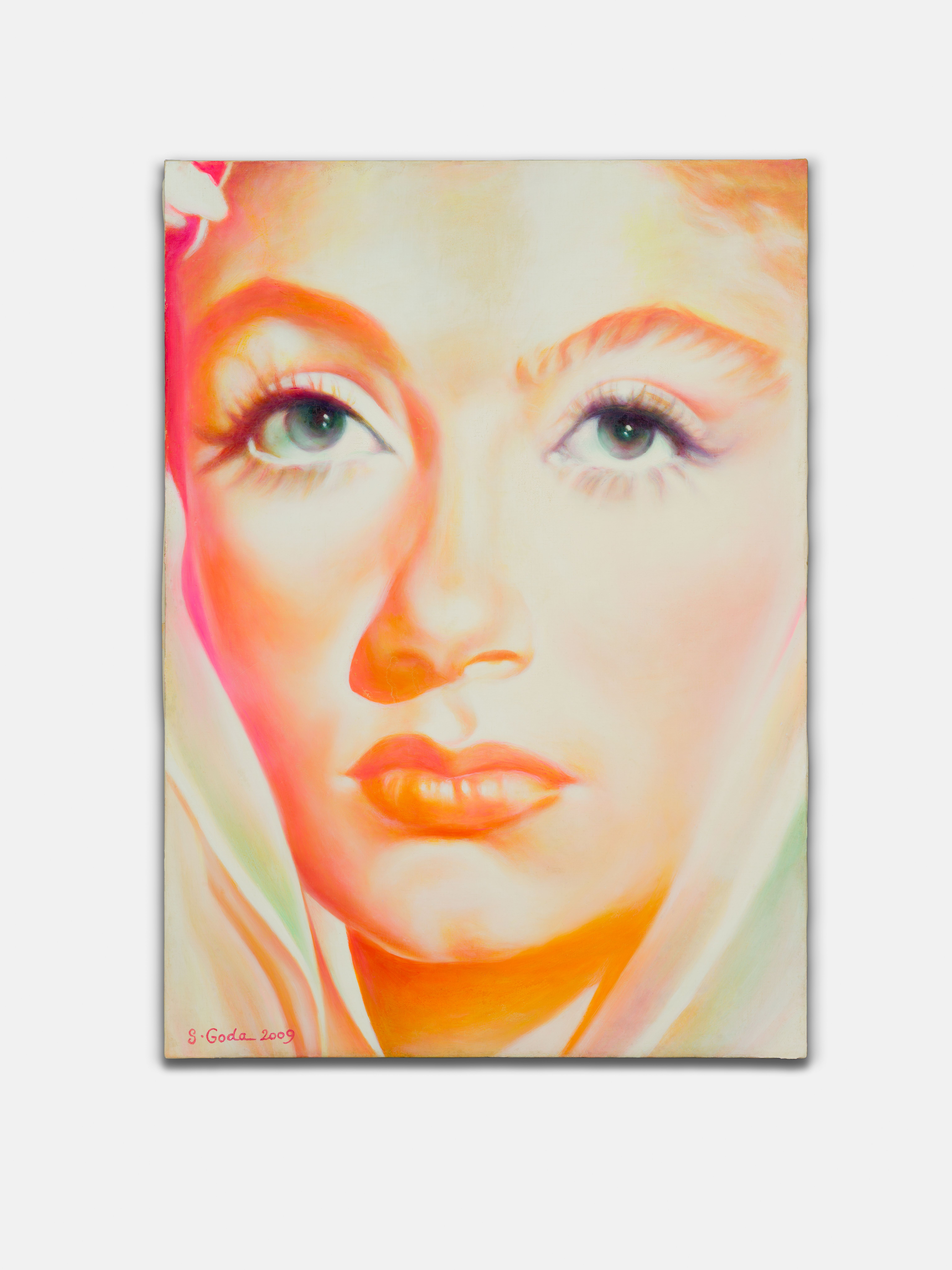
Following her return to Japan later that year, Goda transitioned from three to two dimensions and began creating oil paintings and pencil drawings rendered directly from this photographic source material. Foremost amongst her subjects were decadent, otherworldly depictions of glamorous actresses from the silver screen such as Marlene Dietrich, Veronica Lake, Gloria Swanson, Greta Garbo and Lilian Gish, amongst others. Closely cropped or positioned in non-descript, dreamlike backgrounds, these surreal portraits are characterised by a gossamer softness and an often-uneasy sense of atmospheric stillness. The ethereal female figure has continued to remain emblematic of Goda’s unique visual language and has reappeared over time as an enduring motif. Painted in 1994, Crystal Blue Dietrich B depicts the head and neck of Marlene Dietrich, her hand resting lightly on her head and her neatly coiffed hair and makeup characteristic of the glamorous aesthetic of the Golden Age of Hollywood. Executed with a sombre blue palette and a soft artificial light cast downwards upon the face, this painting is a stark contrast to the later Anouk Aimée (2009), which uses sharper edges and more intense chiaroscuro. Despite depicting icons at the height of their fame and celebrity, both paintings are devoid of any visible identifying markers and have a profoundly timeless quality.
Living in Tokyo throughout the 1970s, Goda quickly established a reputation for herself as a valued member of an experimental community of artists and poets. She designed stage sets and posters for underground theater troupes – including Jūrō Kara’s Jōkyō Gekijo (Situation Theater) and the Tenjō Sajiki (Top Floor Gallery), led by the avant-garde poet and dramatist Shūji Terayama – and immersed herself in rock music culture, depicting her particular favourite, Lou Reed, on more than one occasion. During this period, Goda’s palette shifted to a more sombre monochrome. She also expanded her repertoire into different mediums, producing C-print sequences that explored the relationship of color and form in different ways.
By the mid-1980s, however, the radical allure of the Japanese avant-garde had begun to fade and the artist immersed herself in a culture of a different kind: the mysticism of ancient Egypt. Having first visited Cairo with her two daughters in 1978, Goda decided to relocate her family to Egypt in 1985. Rather than one of the country’s larger cosmopolitan cities, however, she chose the Nubian village of Gabal Takouk, situated on the Nile near the Aswan Dam. The relentless heat, lack of work opportunities for non-Egyptians and unreliability of the international mail system – which Goda depended upon in order to send work commissions to the Japanese newspaper Asahi Shimbun back home – all proved to be deciding factors in their decision to move back to Tokyo after only a year. Despite the brevity of Goda’s Egyptian residence, however, its impact on her life and work was profound, and it engendered a dramatic shift towards the increasingly abstract and visionary. She became fascinated with the paranormal and the expansive unknown of the solar system and claimed to have seen spacecrafts. She also borrowed from the surrealist technique of automatic drawing, deliberately undermining the authority of her own hand by creating artworks produced by wedging watercolor pencils between her toes.
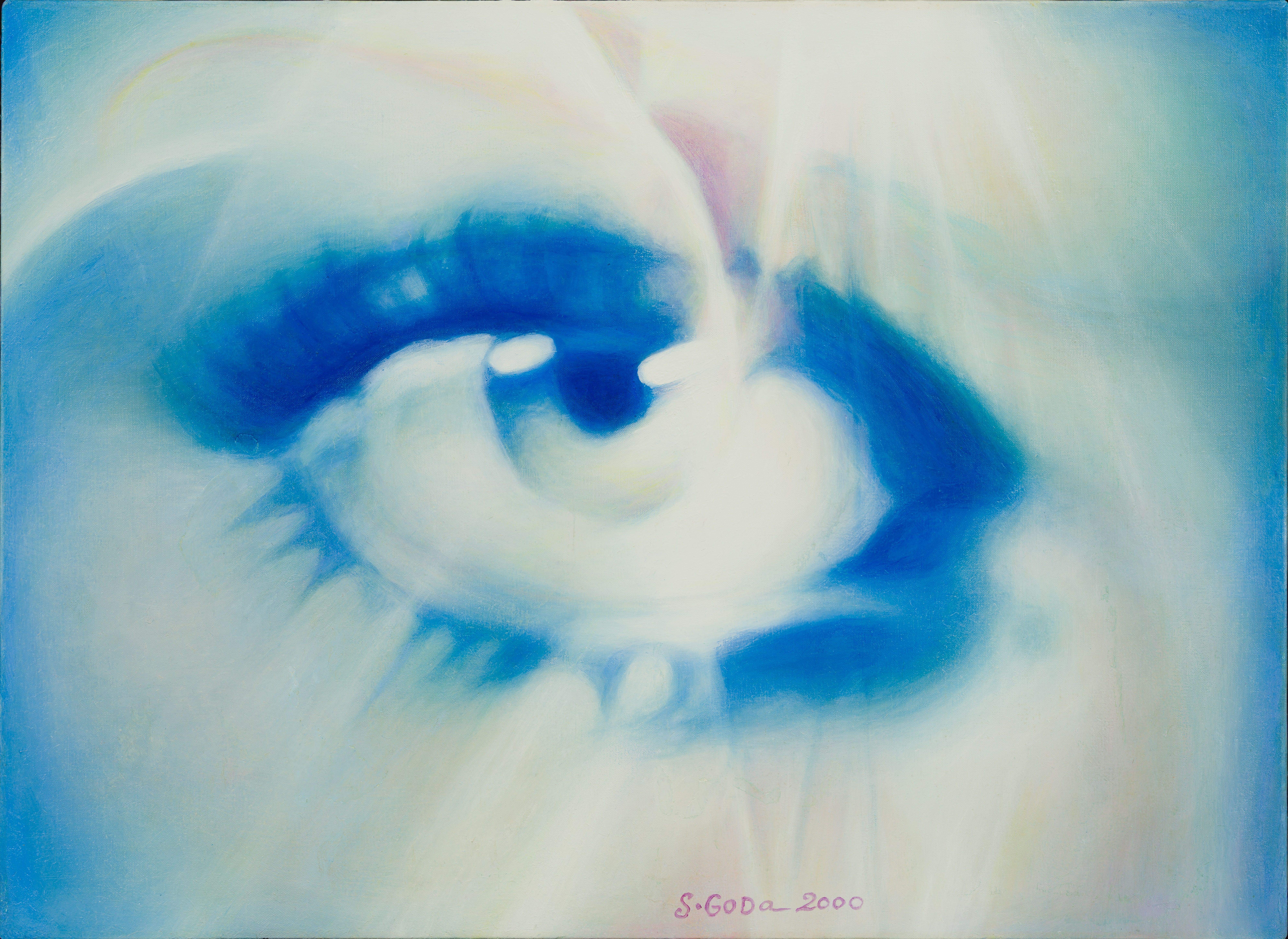
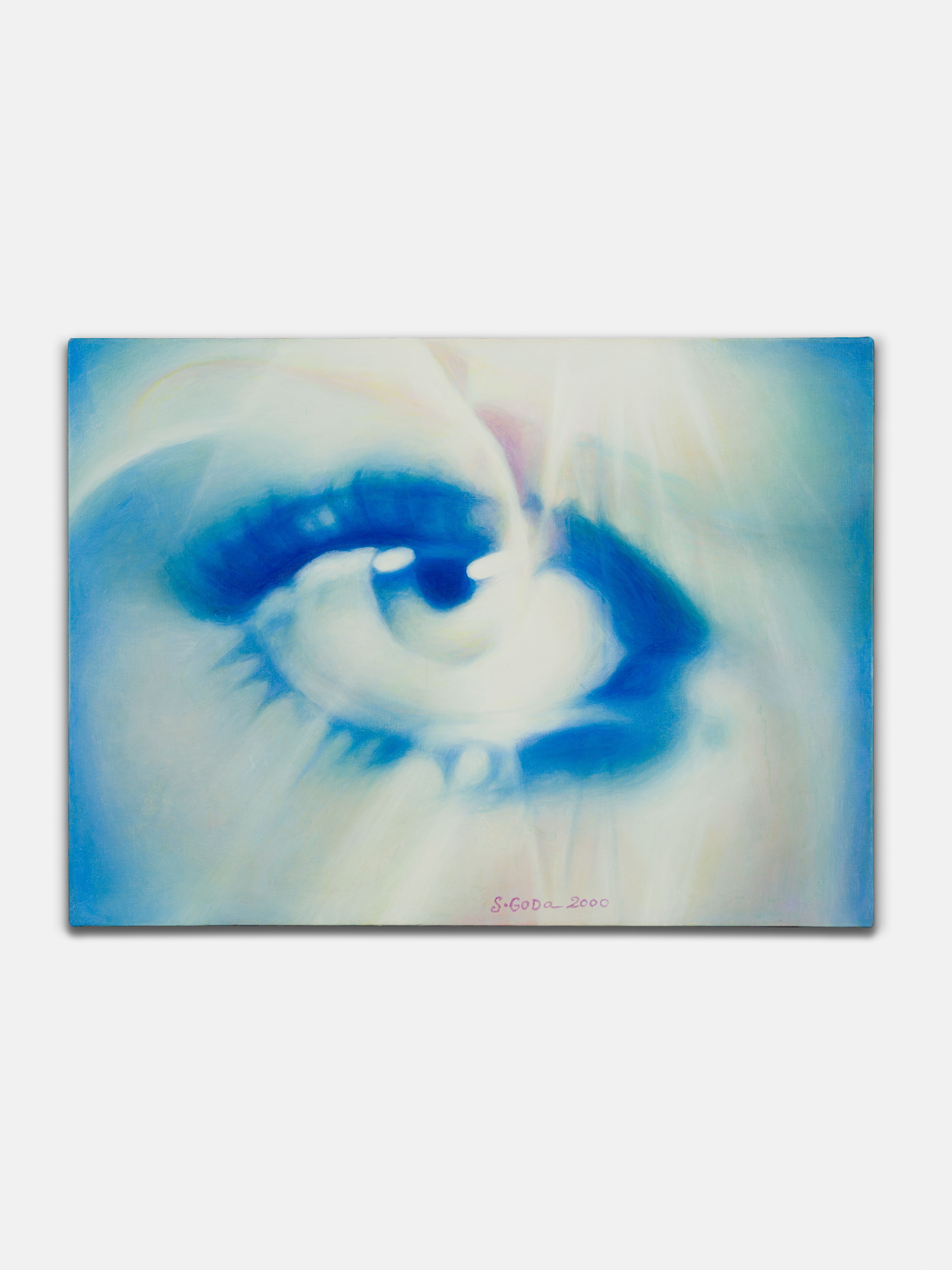
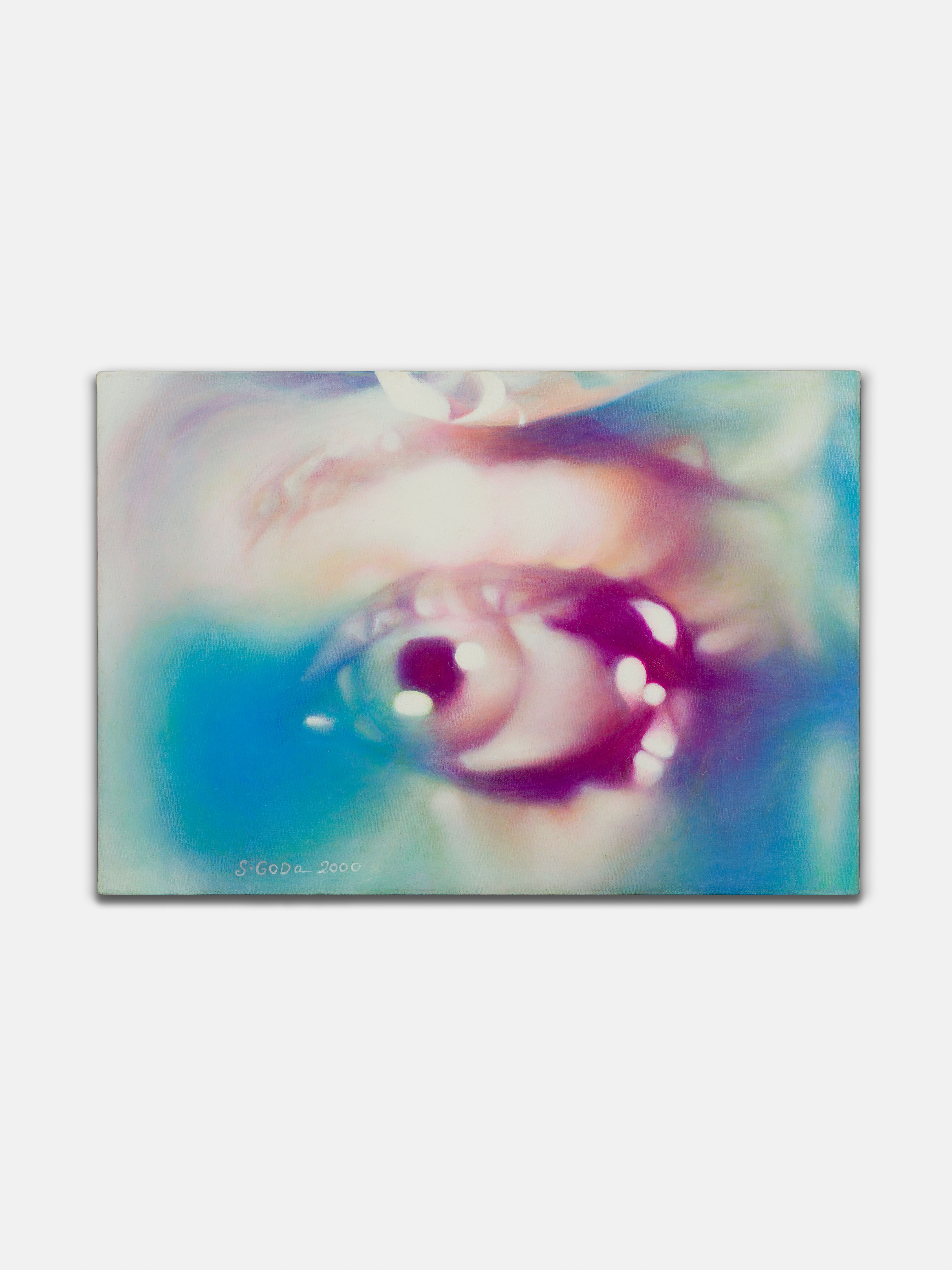
Whilst the eye had been a recurring motif in Goda’s work since her earliest assemblage days, she returned to it with renewed vigor in the 1980s. Influenced by ancient Egyptian iconography and the symbol of the Eye of Horus – a signifier of health and protection – eyes began to proliferate in her work in greater numbers: their presence substantiated by her revealingly titled 1988 publication, A Harem of Eyes, which articulated her own Egyptian experience. In some works, such as the surrealist Rosetta Galaxy (2000), Goda presented eyes in isolation: closely cropped by the parameters of the canvas and isolated from a body to stand as an abstracted symbols of unknown depths and the infinite possibilities of seeing. In others, she seemed to explore the ocular potential of the camera as eye: a window onto the world and a means of articulating the sharp individuality of her own artistic vision. ‘In the process of taking pictures with a close-range lens,’ as she later recalled, ‘I realized that everything has eyes.’ Coinciding with the reappearance of her earlier Hollywood icons, the nebulous luminosity of work from this period suggests an interest in eternity and timelessness: the preservation of the dead as another legacy of her uniquely Egyptian context. In the context of the artist’s own contemporaneous macular degeneration, this focus on vision – both inward and outward – might also be seen as an act of conscious resistance.
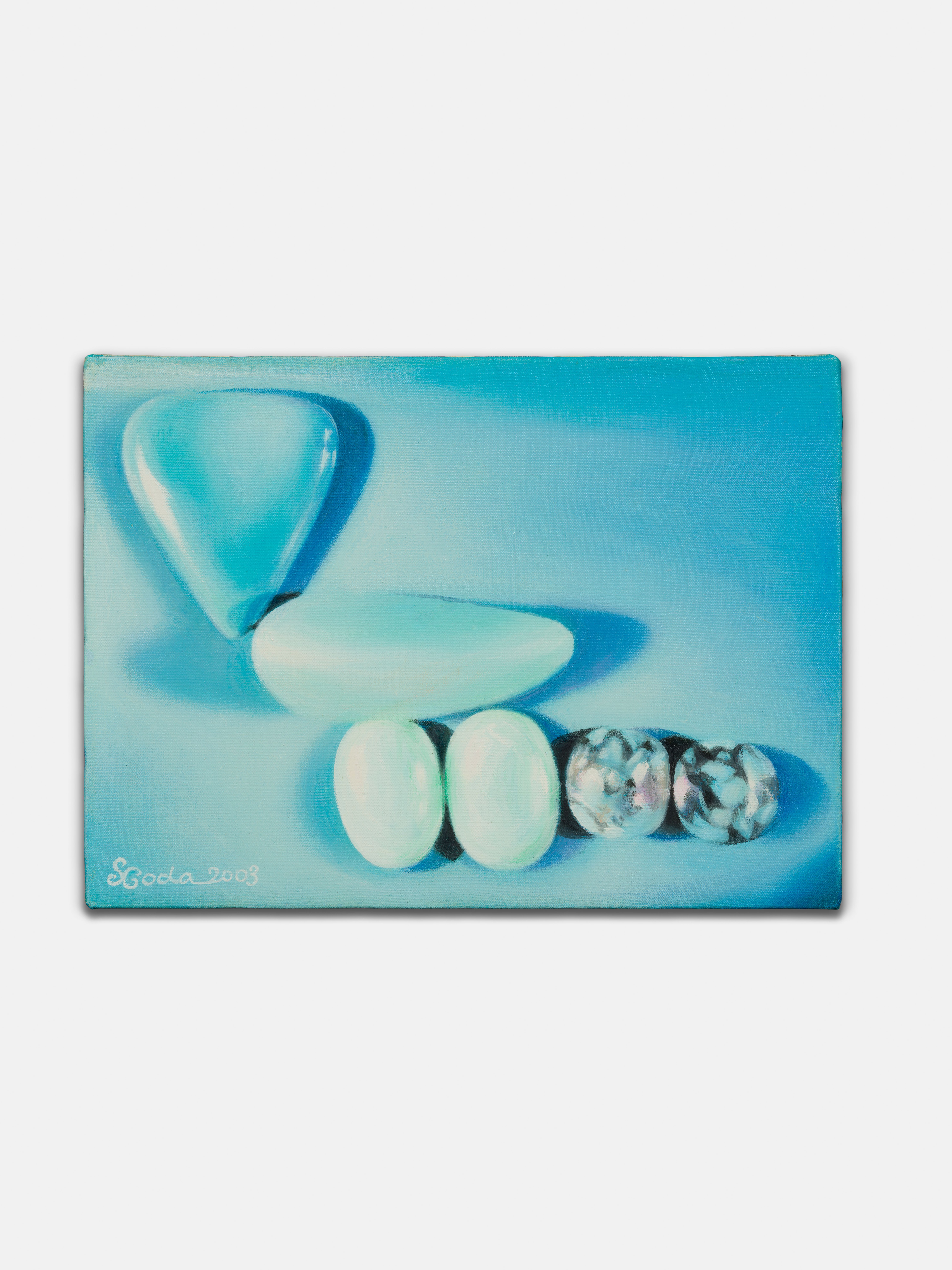
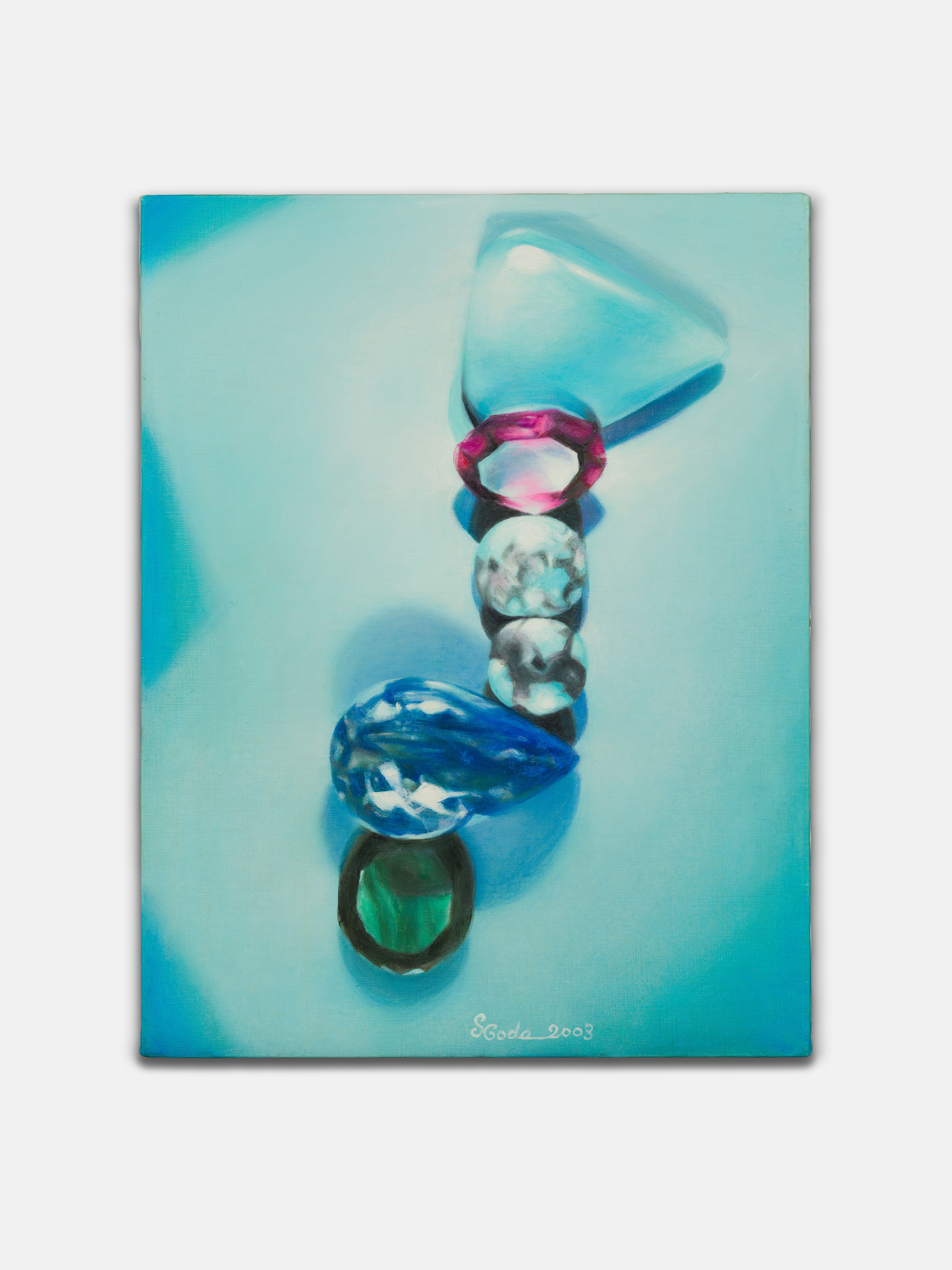
Another particularly prominent recurring form in Goda’s later work is the egg. This enduringly surrealist motif – suggestive of notions of concealment, revelation and mystery – forms a visual and metaphorical parallel to the clarity of the eye. In Procyon 2003, Goda combines two ovoid eggs with crystals and other gem-like objects to create a neat and deliberately aligned gathering of forms. The title of the work – as Goda’s interest in astronomy might suggest – references Procyon: one of the brightest stars in the sky and the primary component of the Canis Minor constellation. In another work, Little Bird Necklace B (2003), Goda combines the same circular crystals and triangular turquoise stone with an emerald, sapphire and ruby. Elegantly configured into an elongated, vertical form – suggestive of a stylized bird with beak and tail – this collection of objects demonstrates the dazzling precious gemstones characteristic of ancient Egyptian jewellery and headdresses. As compilations of objects knowingly collected and displayed, both works also suggest the enduring influence of another formative reference point: Goda’s childhood experiences of scavenging for treasure in a desolate landscape of wartime rubble. Transparent shards of melted glass and lustrous fragments of scorched metal were gathered on an equal footing with stones, shells, animal bones, wooden scraps and other peculiarly-shaped natural objects. As she recalled in one particularly transfixing memory: ‘The ruins of the glass shops and hardware stores were a treasure trove like no other. Emeralds, rubies, and gold seemed to melt dreamily, congealing with the sand and soil.’ Produced six decades after her experience of postwar ruin, Procyon and suggest enduring sentiments of both poignant loss and triumphant discovery.
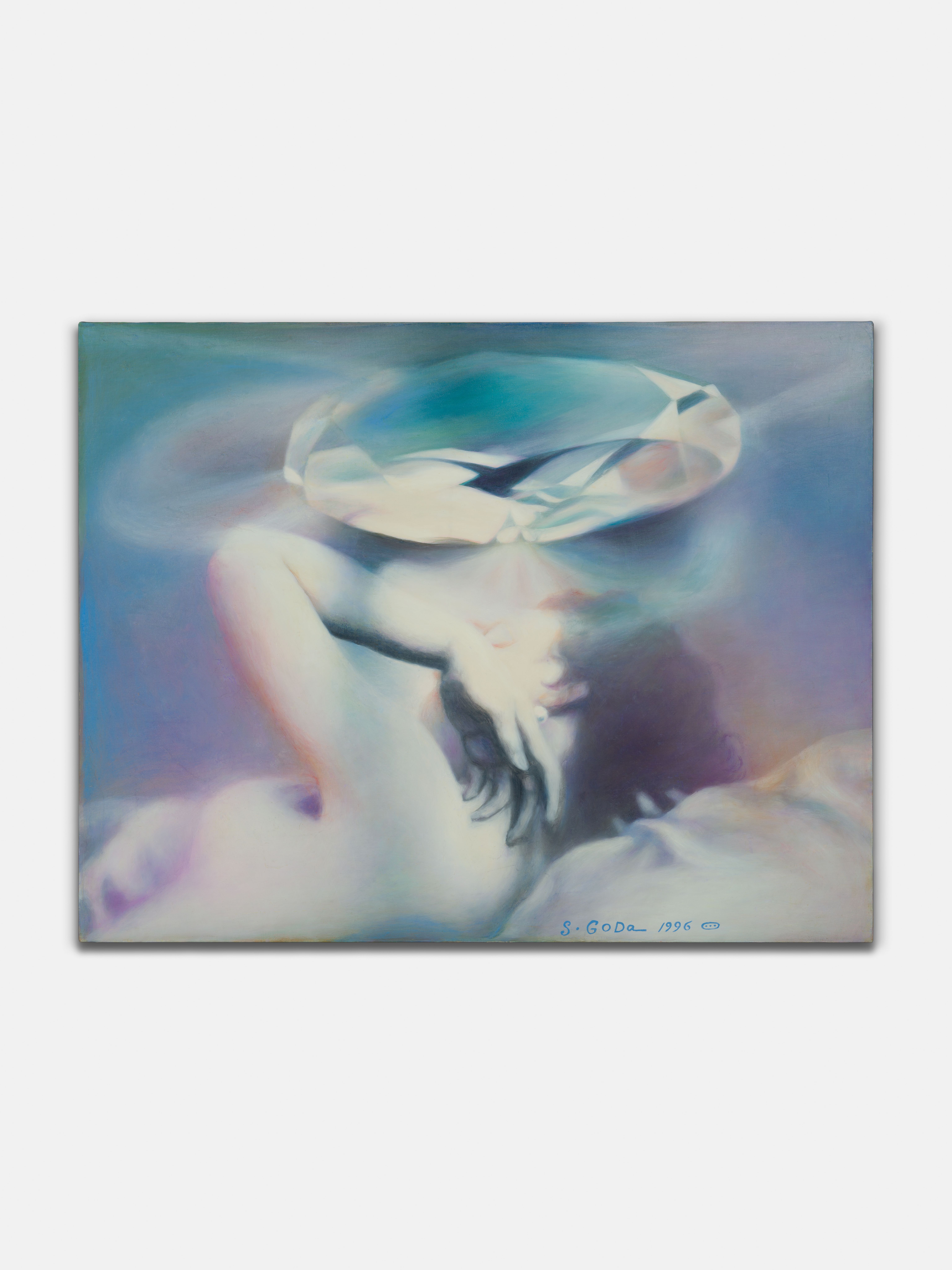
As well as isolating the crystal as a singular motif in these small-scale painterly still-lifes, Goda weaves treasure into other compositions, creating iconographical juxtapositions that suggest rich new meaning. In Crystal Blue Dietrich B a gemstone is balanced on the top of Marlene’s head, seemingly underscoring the dazzling brilliance of the Hollywood star. In another painting, Wake Up Call (1996), a glistening crystal hovers above an ethereal sleeping figure like a spacecraft, drenching her face with light in a kind of otherworldly apparition. Time spent with Goda’s work gradually reveals subtle crystalline presences of other kinds. In Rosetta Galaxy and Untitled, both 2000, a multiplicity of interconnecting multicolored lines evoke shards of light refracted through a crystal itself.
Goda’s particular poetics of postwar desolation are also seen in a series of C-print which depict gemstones and found treasures in intense close-up detail. Goda spent the final years of her life in Kamakura, a seaside city located south of Tokyo. Whilst its quiet tranquillity allowed her to explore her full visionary potential without social restriction or constraint, it simultaneously excluded her from the attentions of those responsible for establishing histories of postwar Japanese art. Through its subtle exploration of themes of beauty, memory, attraction and mortality, Sawako Goda’s oeuvre is much like the eye-egg dualism so central to her later work: a vast and unknown entity, waiting to be fully understood.
Text written by Hannah Johnston.