Ludovic NkothBetween Lines
Installation Views
Artwork
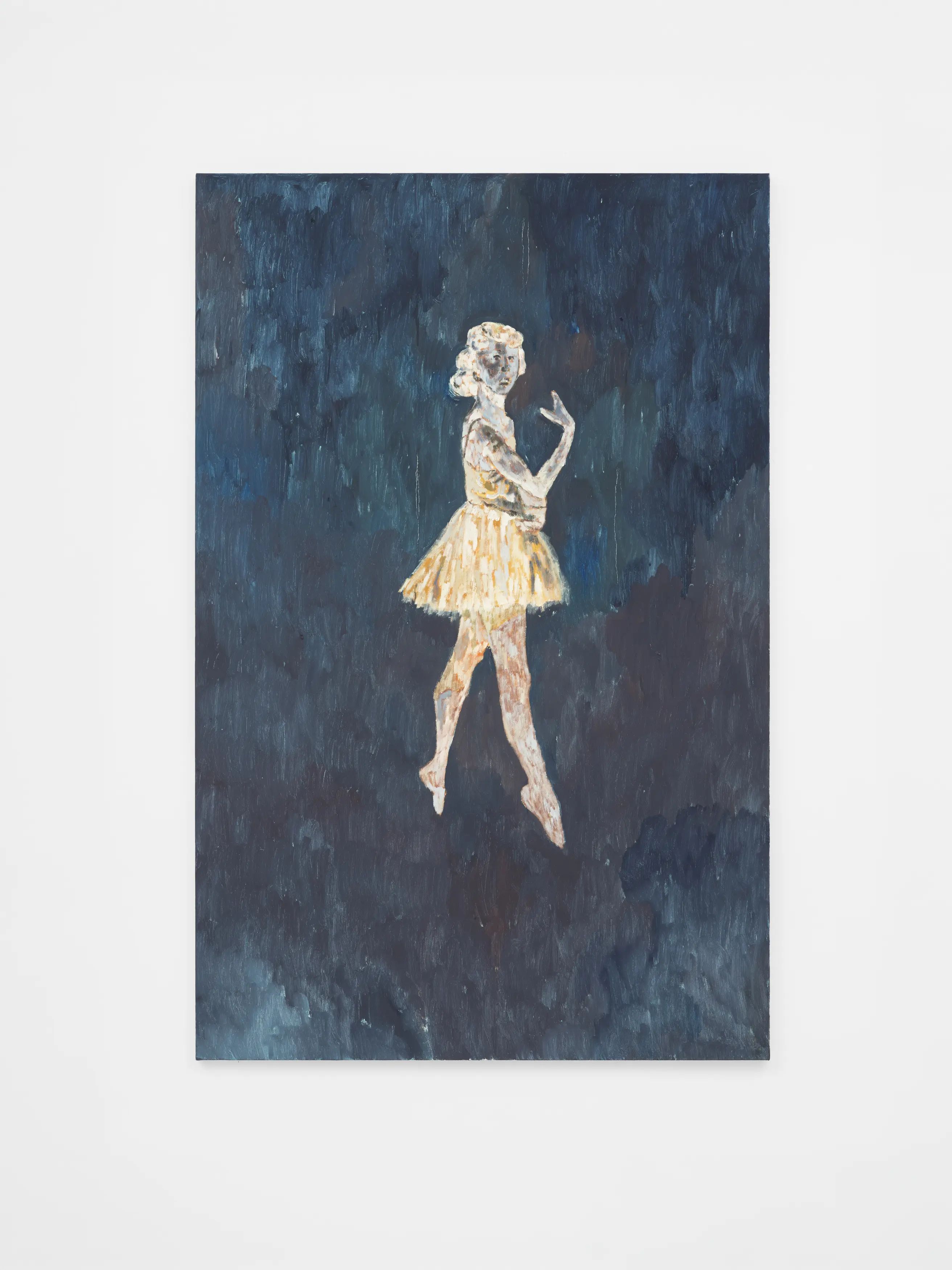
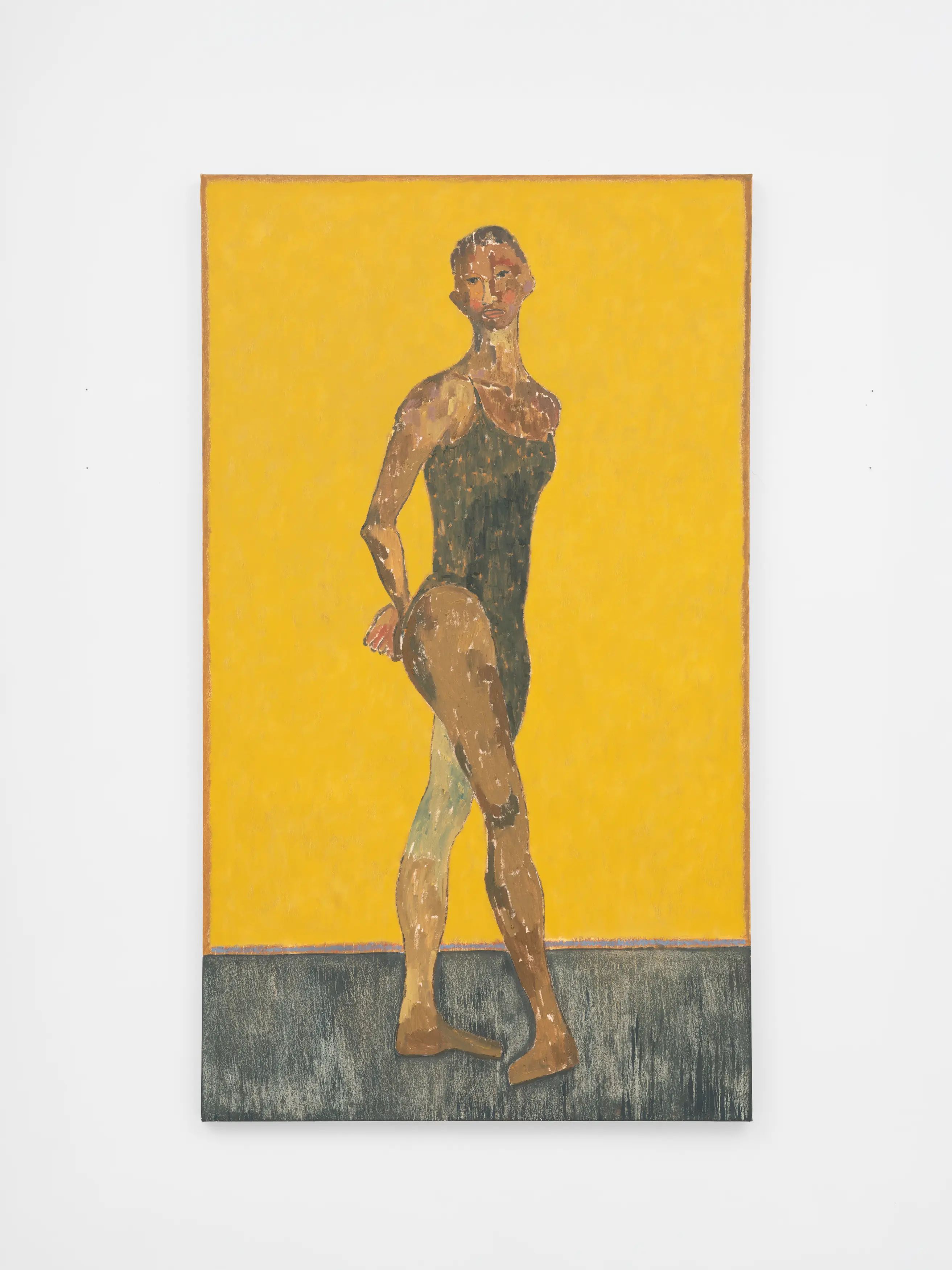
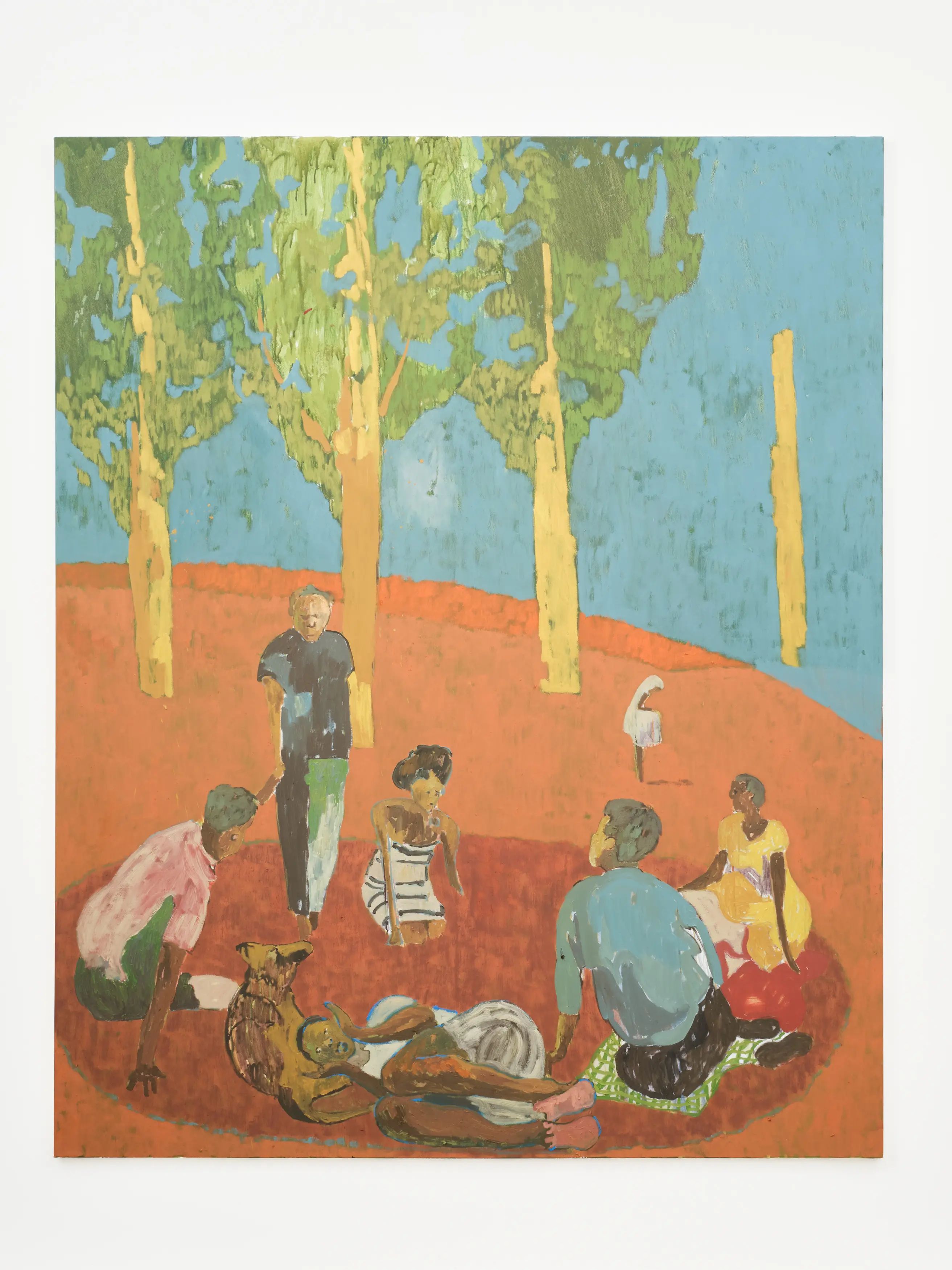
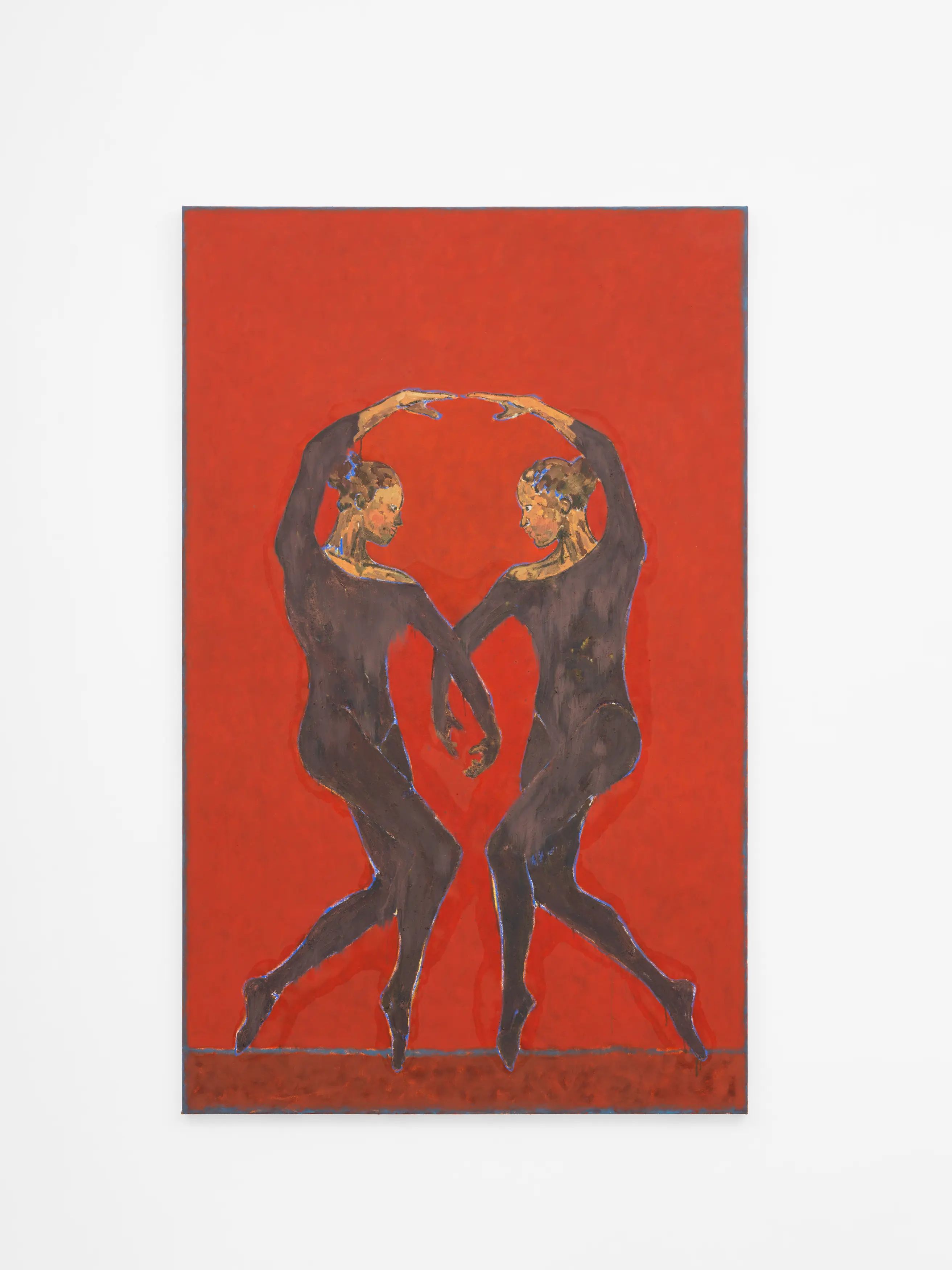
Meaning is invisible, but the invisible is not the contradictory of the visible: the visible itself has an invisible inner framework. – Maurice Merleau-Ponty in The Visible and the Invisible
For Ludovic Nkoth, the body is never simply what appears on its surface. A gesture, a posture, a face, or a painted line can reveal something while leaving something else just beyond view.
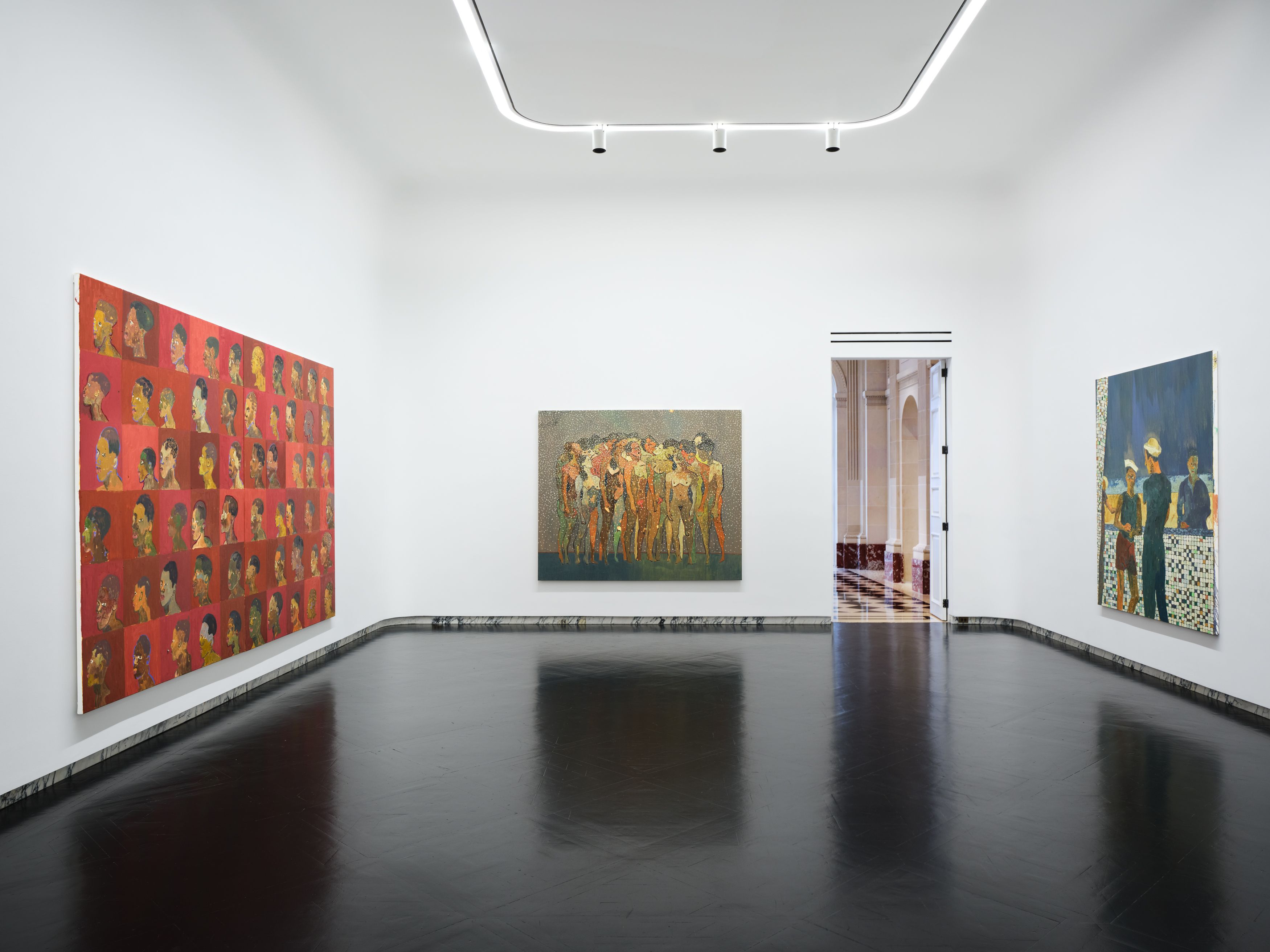
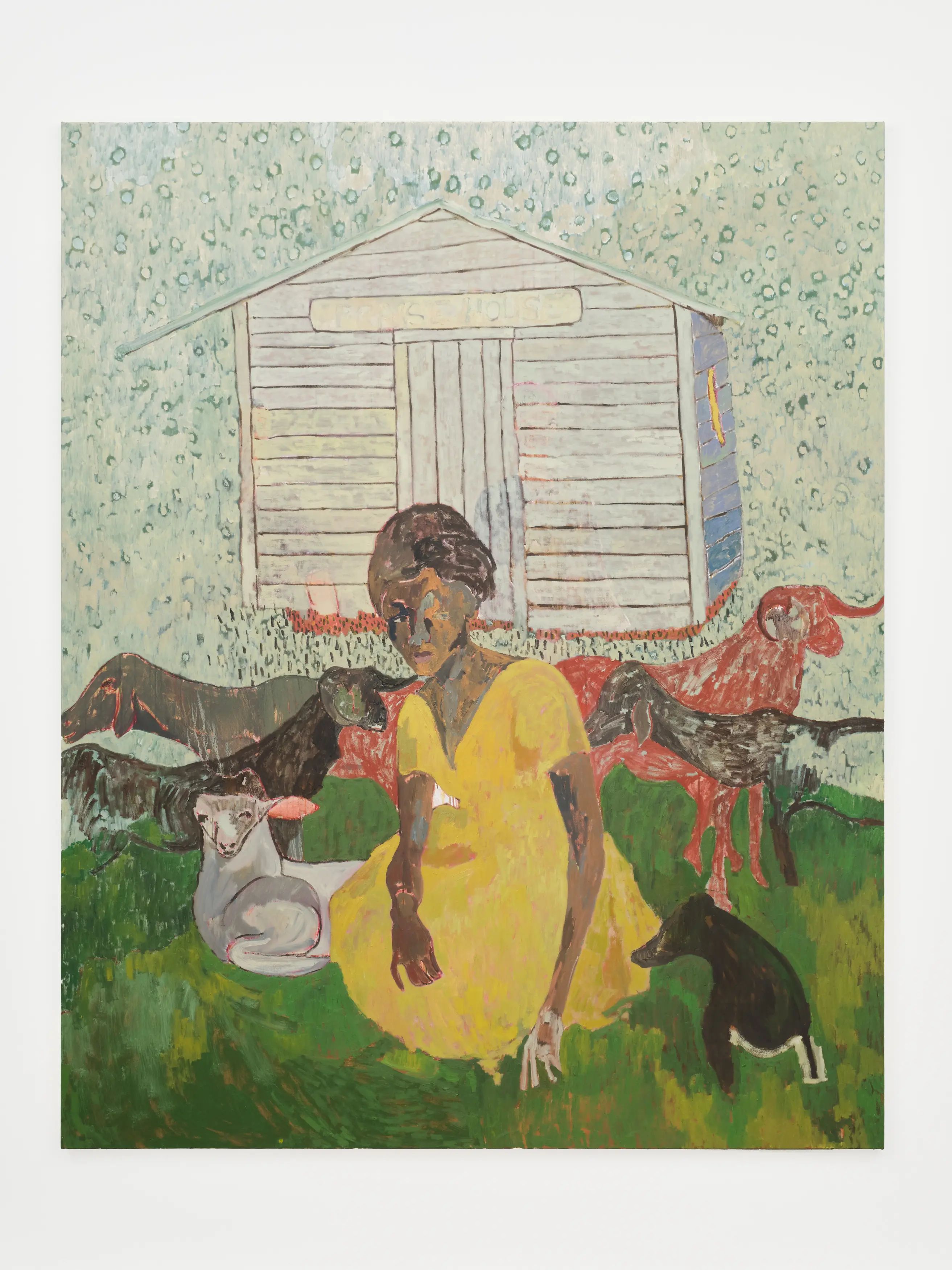
Salon 94 presents Between Lines, new paintings by Ludovic Nkoth, marking his first major solo exhibition in New York City. Across these works, movement becomes both a physical and psychological experience: something enacted through the body, but also carried within it after the action has passed. Lines organize the paintings, dividing space and directing the eye, while some marks beneath the painted surface remain visible, keeping the process of making perceptible within the finished gestalt.
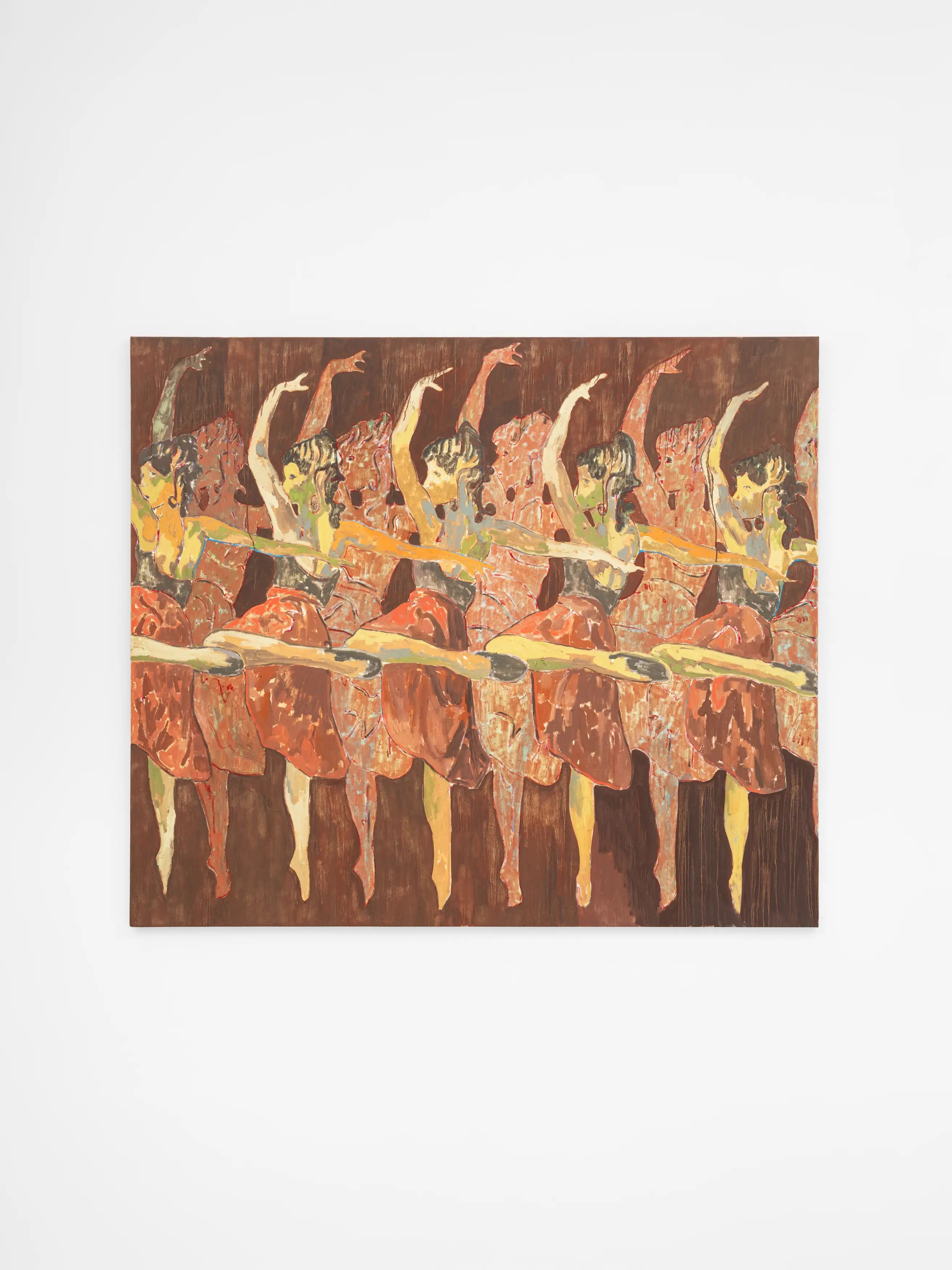
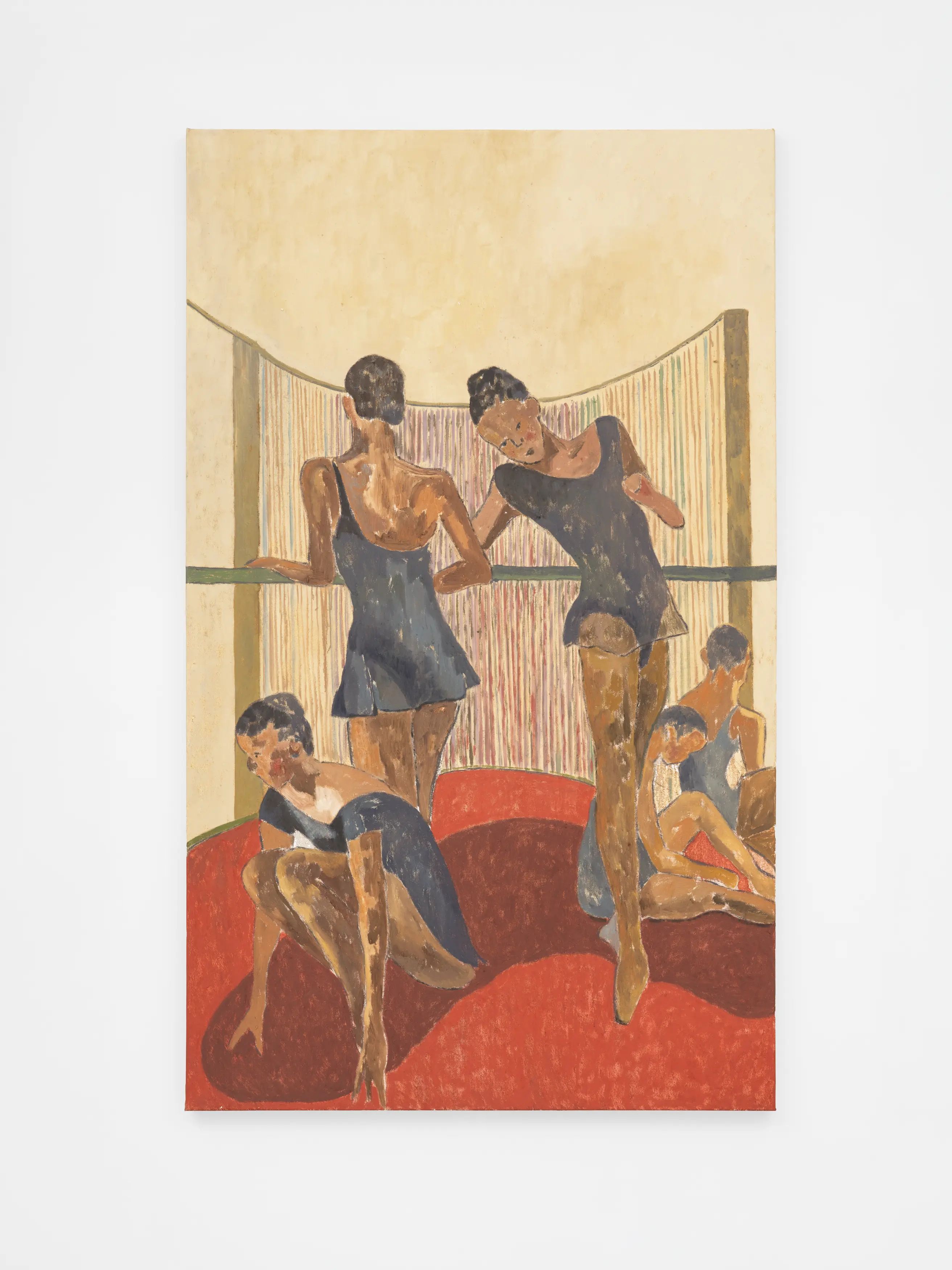
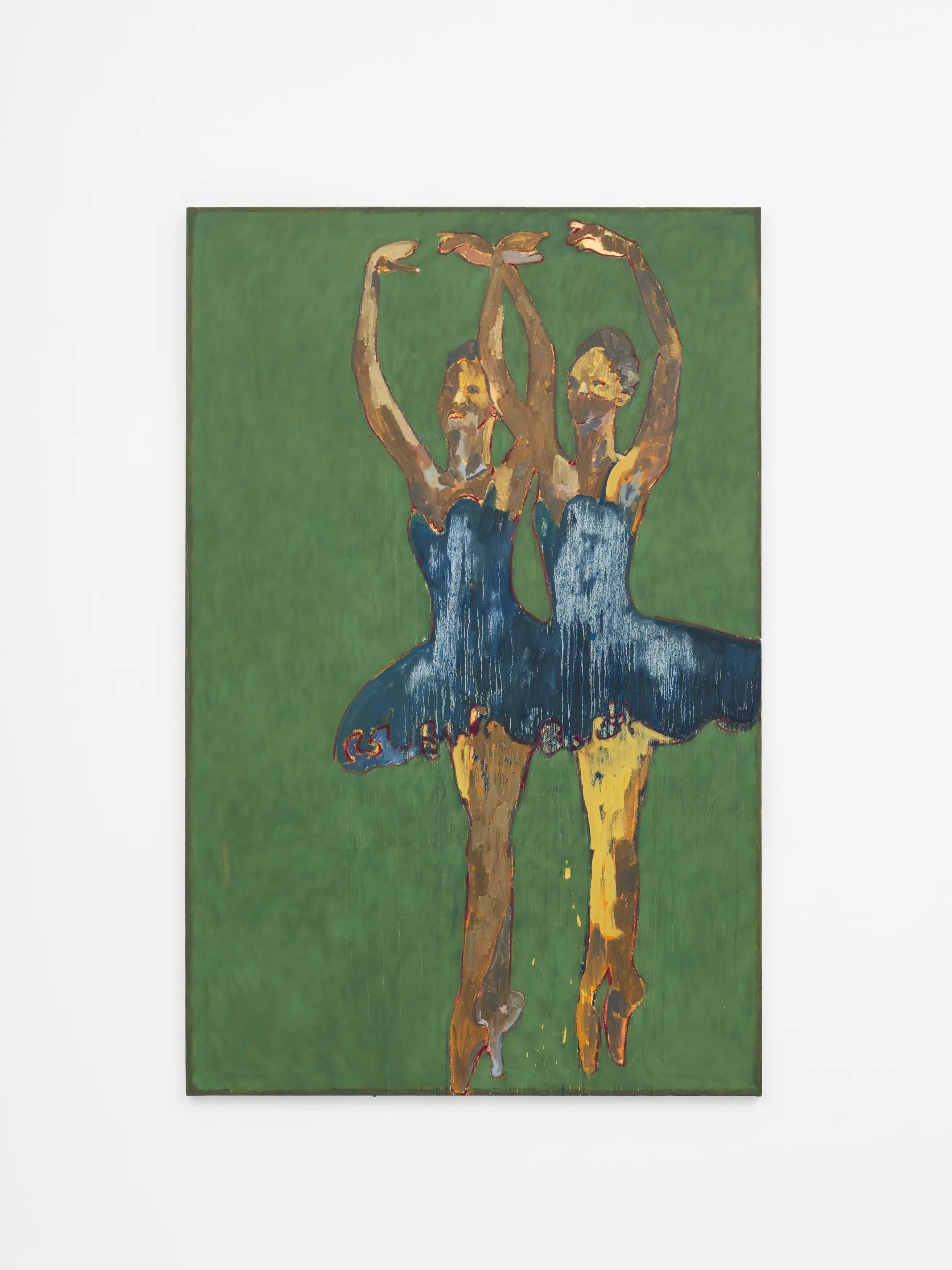
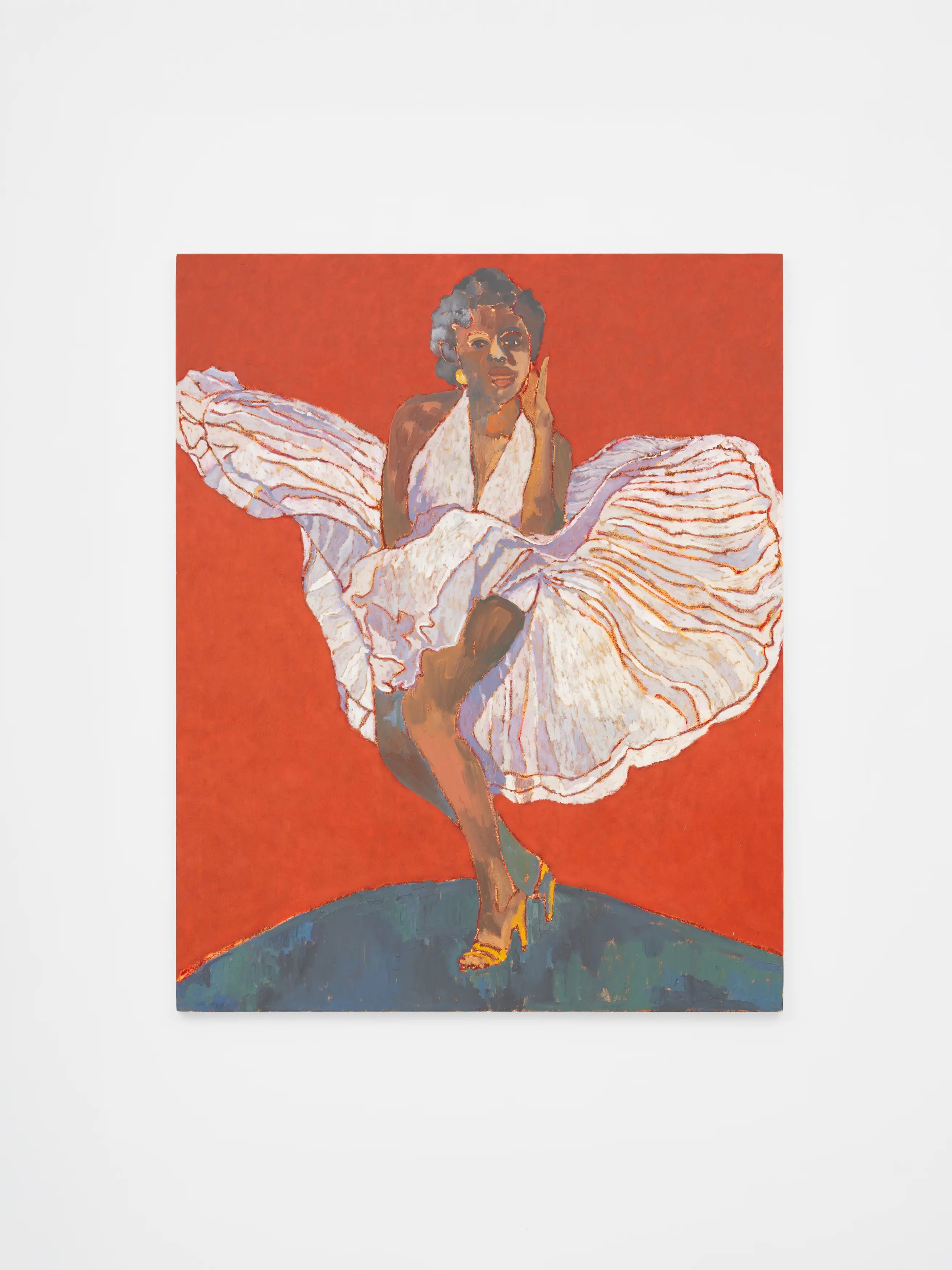
On the second floor, paintings of dancers occupy the gallery’s Stone Room, where limestone walls and a checkerboard marble floor give the space its own geometry. In Moulin Rouge (2026), a row of dancers moves across the canvas in near repetition, raised arms and extended legs carrying the eye from one figure to the next. Elsewhere, in Posit (2026), a solitary figure stands against a saturated yellow field, one leg crossed over the other, looking directly outward. Her pose is composed, even self-conscious; she seems aware of being watched.
Ballet offers Nkoth a way to consider the distance between effort and appearance. Years of repetition, strain, and discipline culminate in a gesture that seems to require none at all. Something similar happens in painting, where the labor of mark making disappears into its apparent ease. Performance also resonates with Nkoth’s personal experience of migration. Moving through an unfamiliar world requires learning its rhythms: how people behave, when to speak, how to occupy a room. With time, these adjustments become second nature. The effort remains, even when it is no longer apparent.
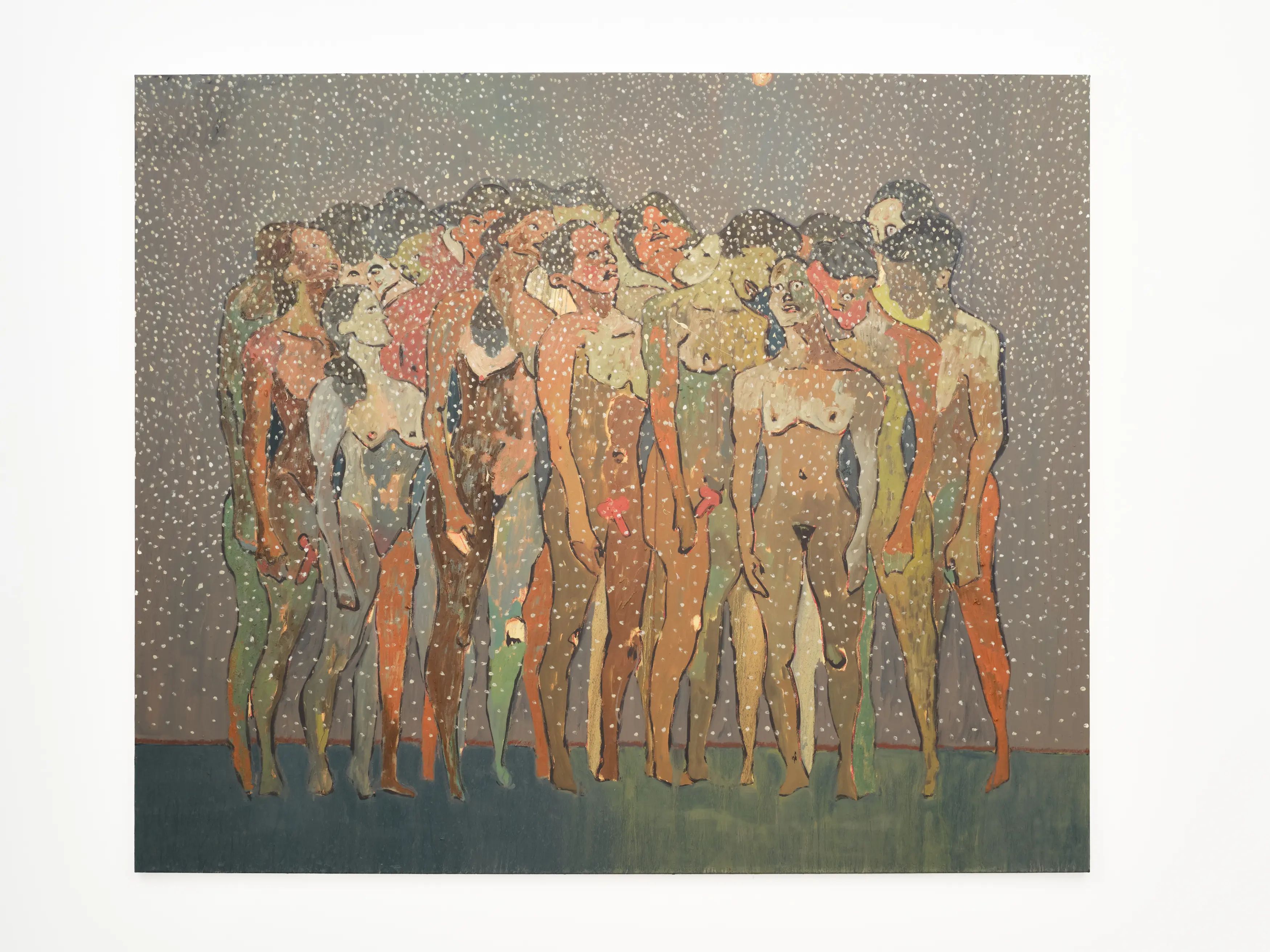
The relationship between performance and adaptation extends to Between Lines (2026), where four figures seem caught between movement and stillness, pausing within a moment of ordinary interaction. Each is engaged with the others yet absorbed in a private gesture. Lines running across the room divide and connect the figures at once, while the visible marks beneath the paint keep the process of making close to the surface. The painting becomes less a depiction of a scene than a record of bodies finding their positions within it.
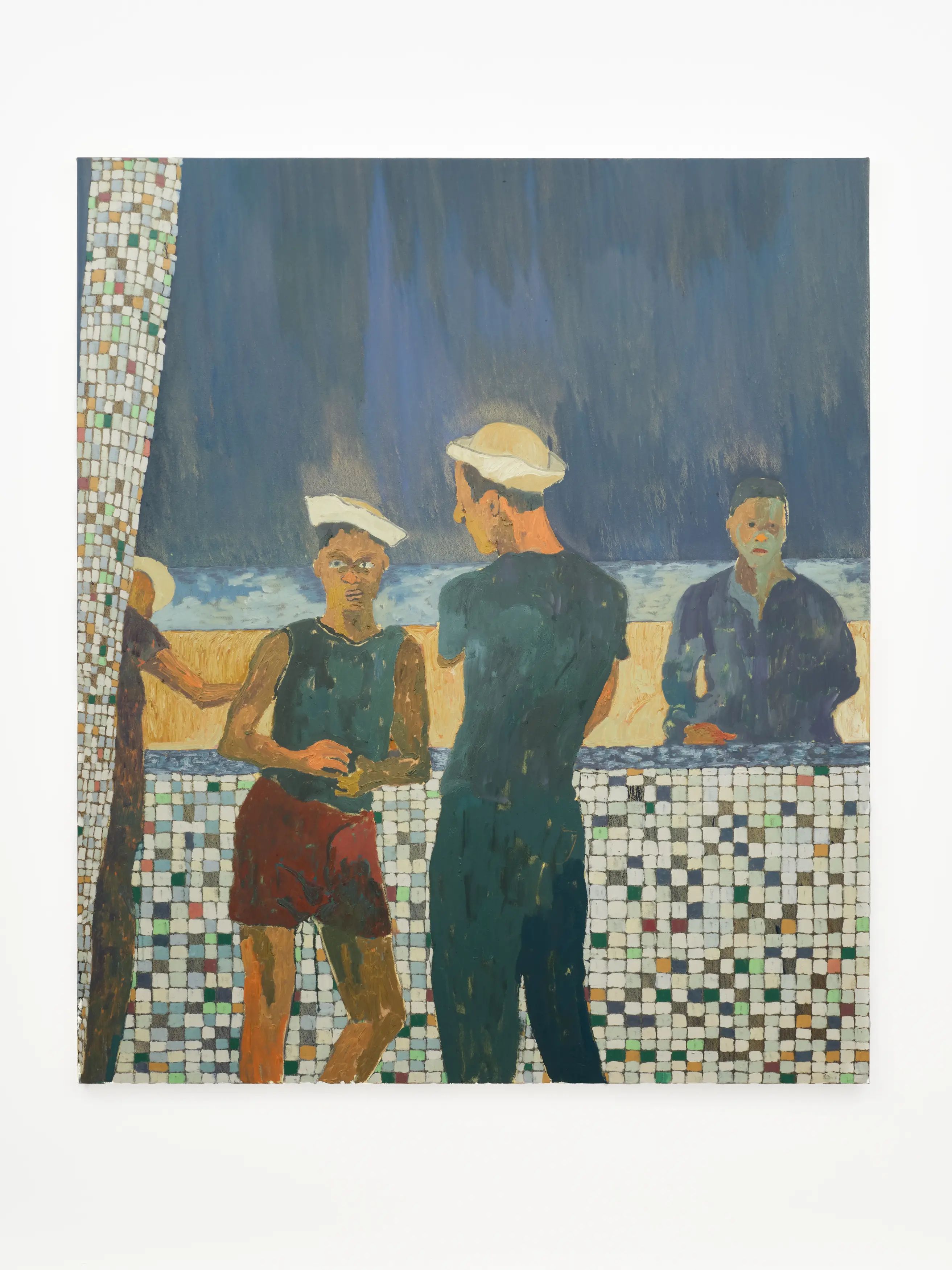
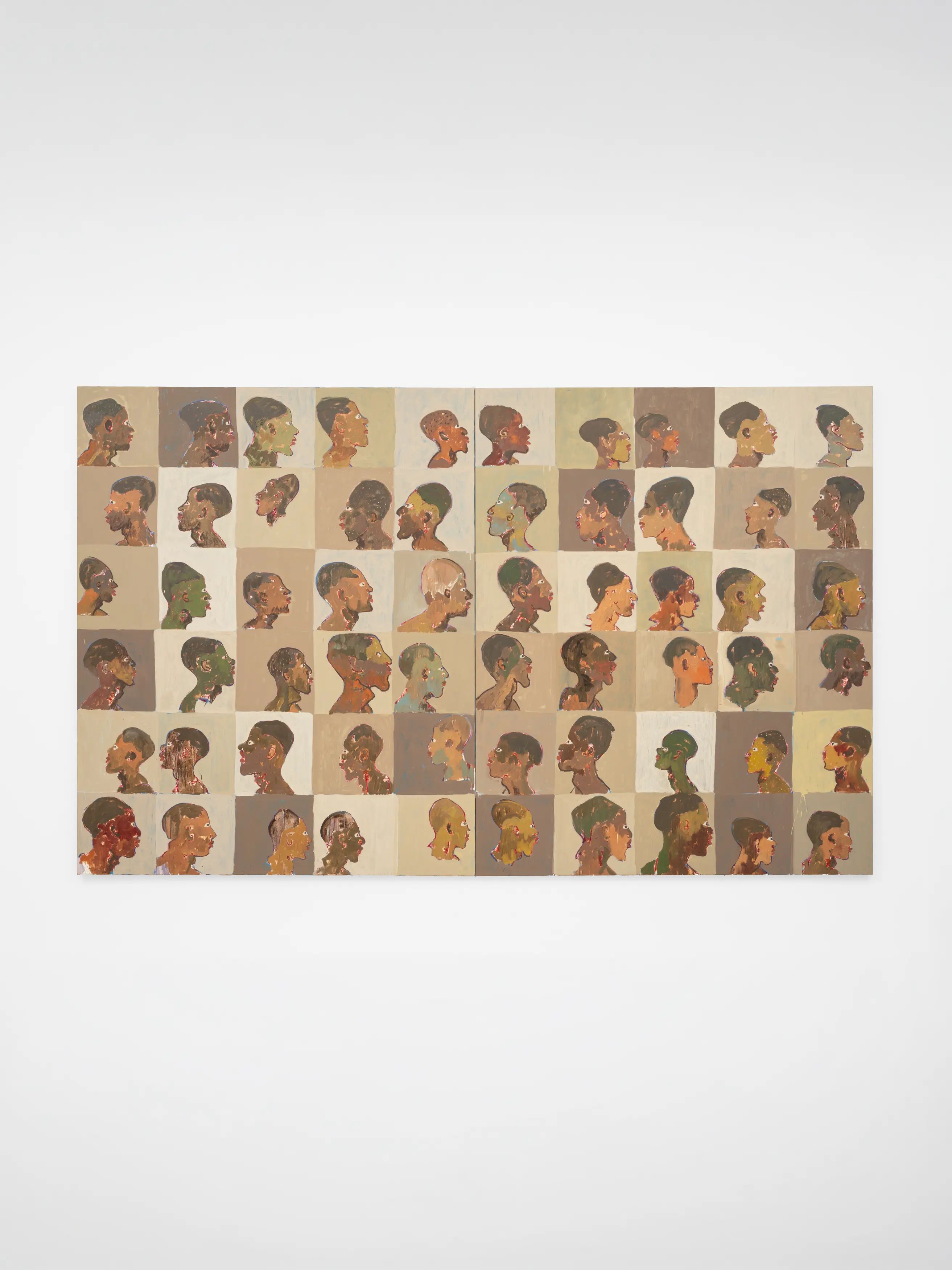
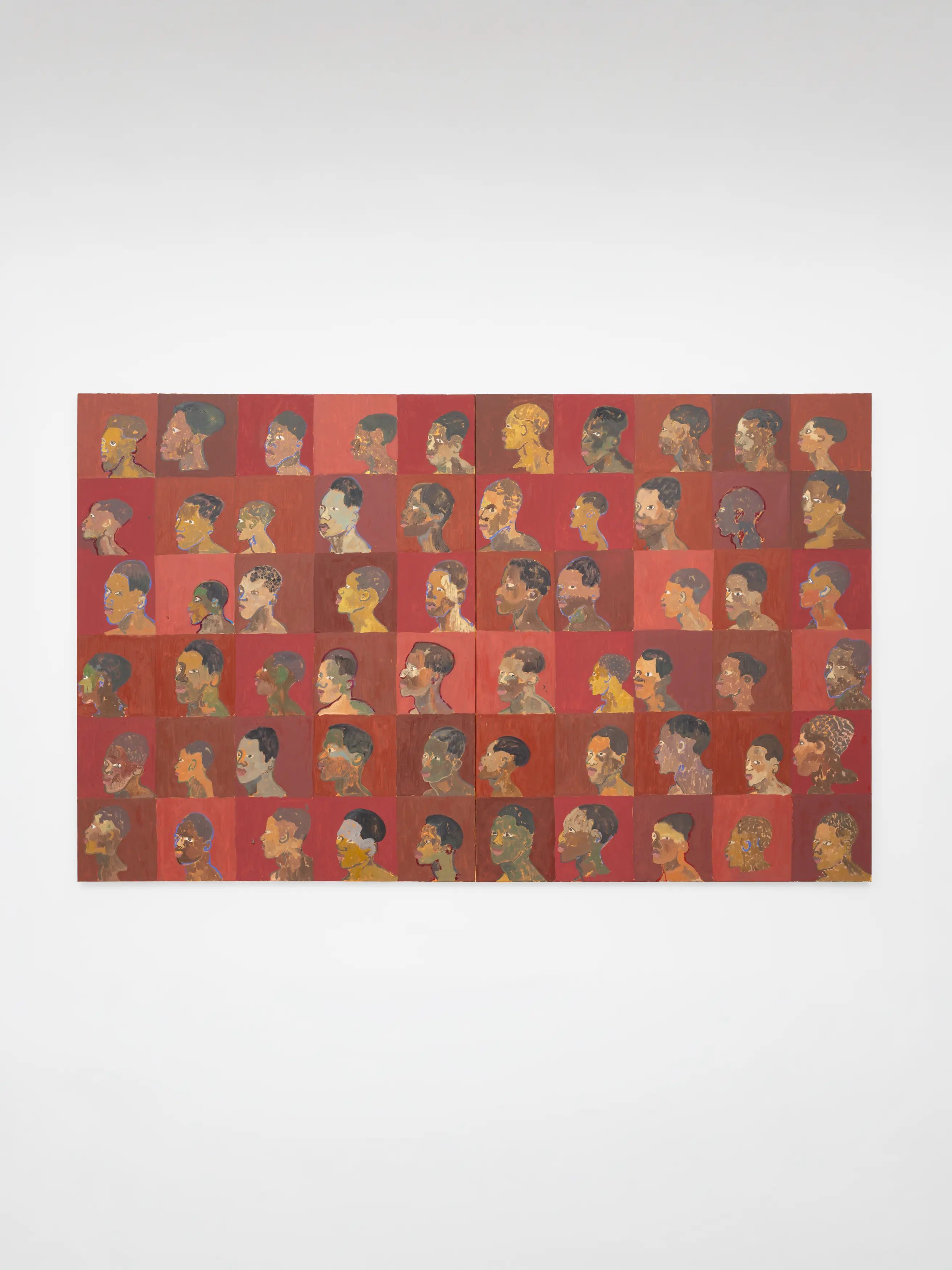
In After Hours (2026), four figures gather around a tiled room. Two face one another in the foreground; the others look outward or disappear partly from view. The scene offers no clear account of what has passed between them. The repeated squares of the tiled surface lend the composition a certain order, but the figures seem occupied by separate thoughts, their proximity offering little assurance of intimacy. A more explicit system of organization emerges in works like System Grid – Red Diptych (2026), dozens of painted profiles arranged in a rigid sequence of individual fields. The faces accumulate across the surface, each given a place within the larger composition. Repetition lends the grid its order, but the profiles resist becoming interchangeable. The painting holds a tension between the individual face and the structure that contains it.
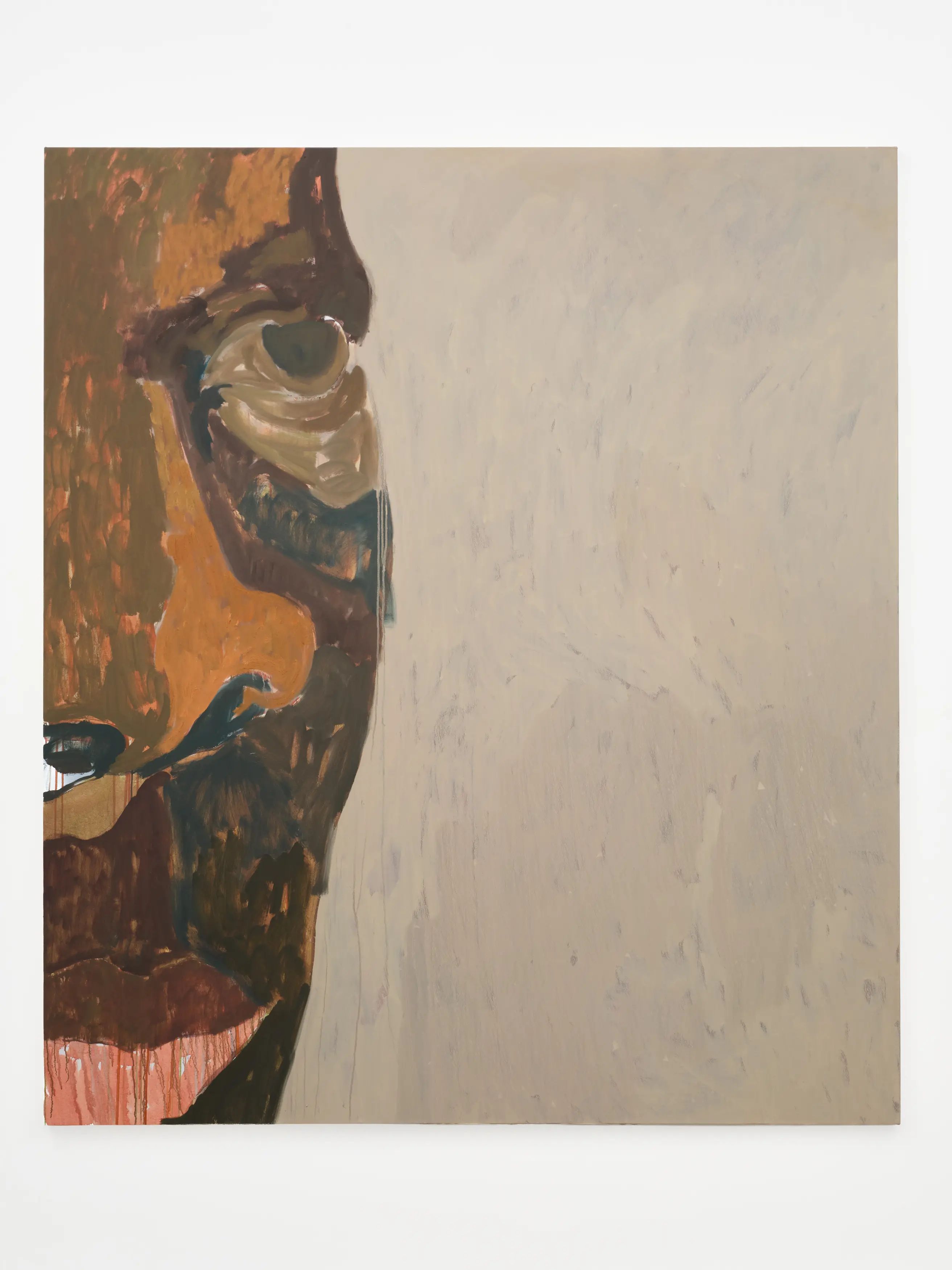
In Self Portrait (2026), a partial figure enters from the left edge of the canvas. The face is incomplete, its contours fading into a largely open, pale ground. He gives us enough to recognize a person, but not enough to make the image feel settled. The figure seems to be emerging into view, or slipping out of it.
Across Between Lines, the body is shaped by what it encounters: the societal demands of everyday performance, the unspoken arrangements of shared space, the experience of being seen and the ways in which we choose to be unseen. The marks that remain beneath the paint suggest that a painting’s making, like the experiences carried by the body, does not simply disappear into its finished form.
Life leaves a weight on the body, but the body continues to move.
For press inquiries, please contact, please Gina Nanni.
For information about Ludovic Nkoth, please contact Jack Ross.