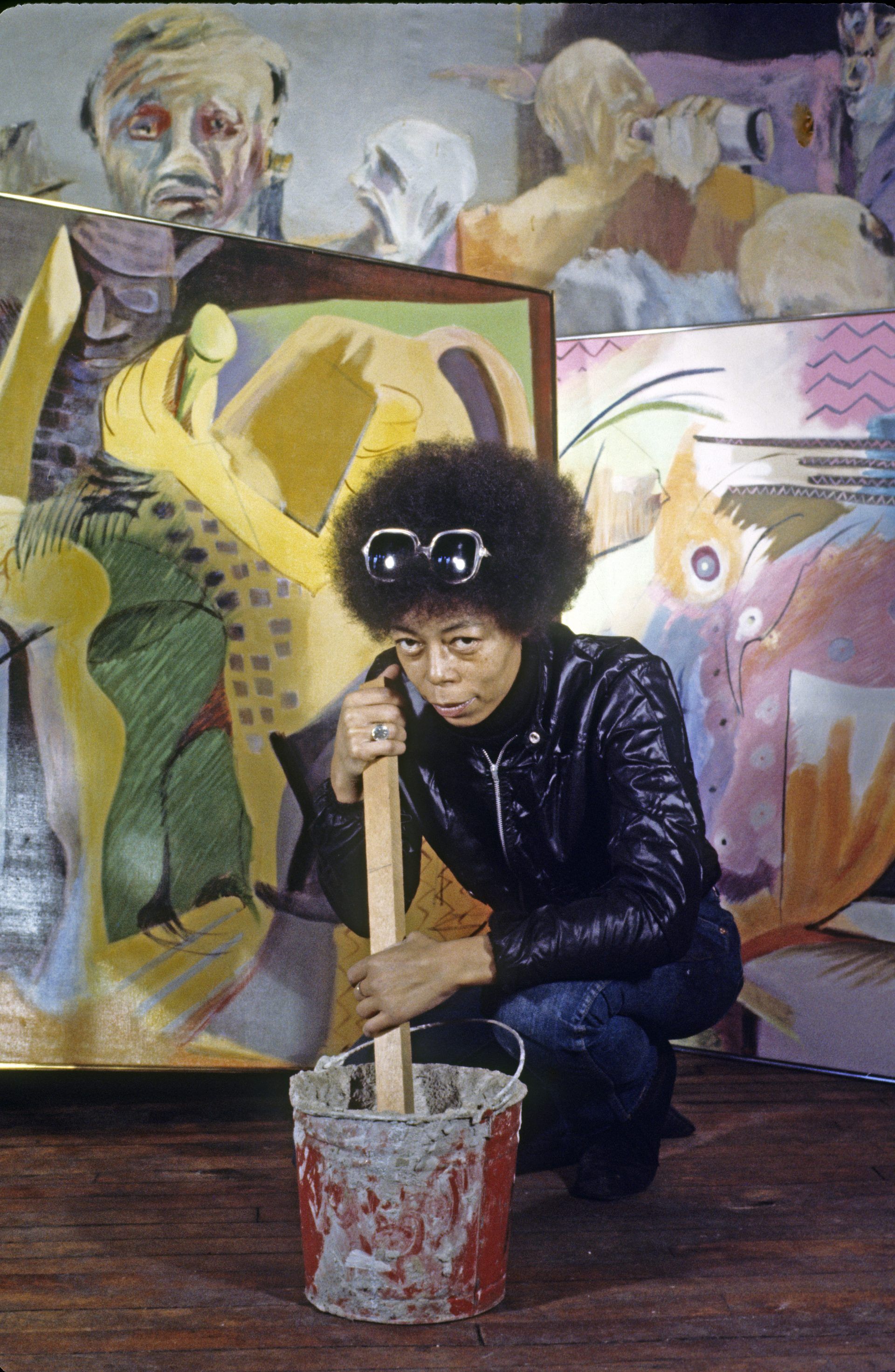
Vivian Browne
b. 1929 - d. 1993
b. 1929 –– d. 1993
Artwork
Exhibitions
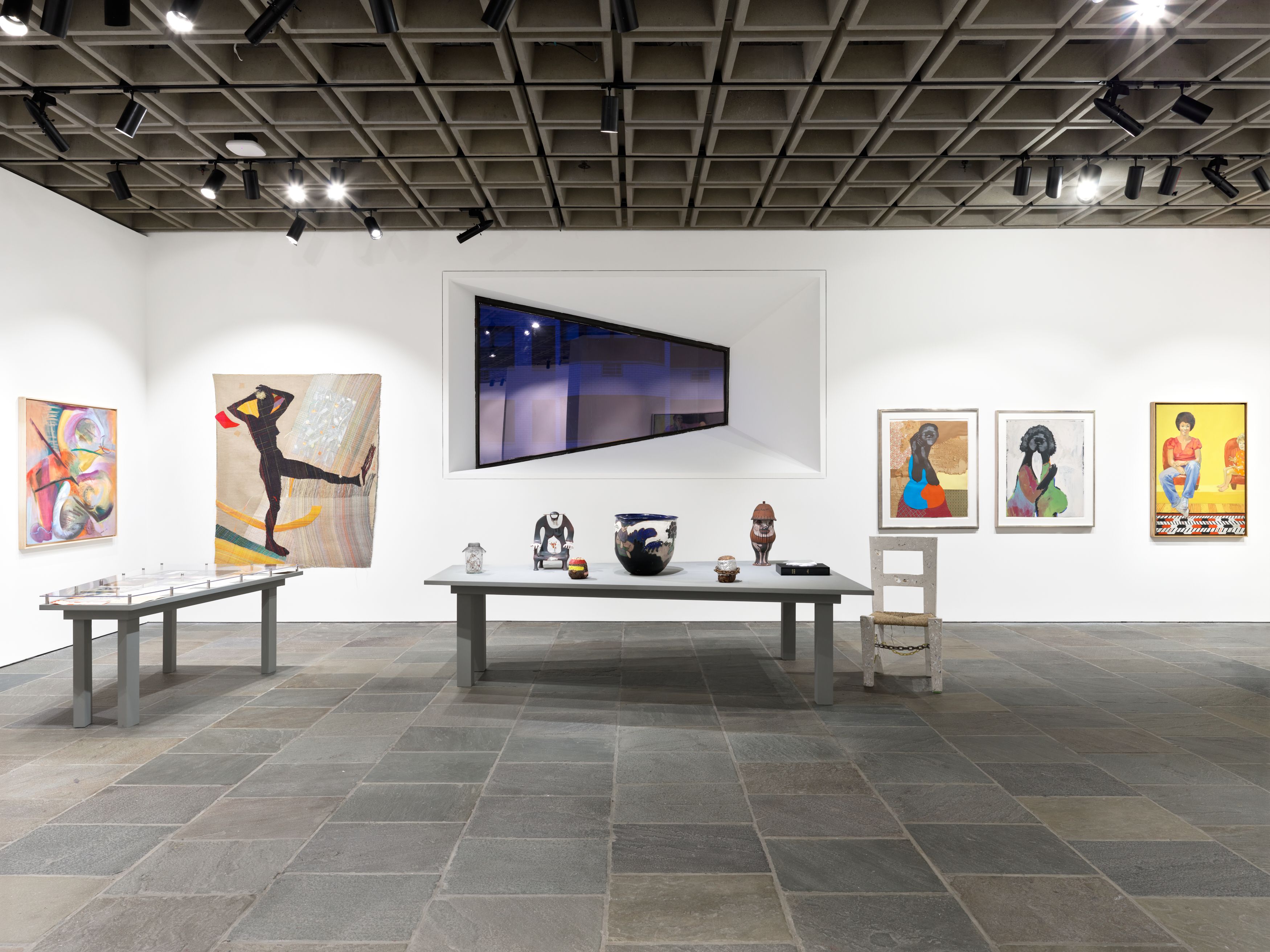
Independent 20th Century 2026
Biography
Vivian Browne (b. 1929 Laurel, FL – 1993 New York, NY) was known for her culturally critical portraits and abstract paintings inspired by her travels and socio-political observations. Probing the intersection of misogyny and racism throughout her life and practice, she declared in 1985: “Black art is political. If it’s not political, it’s not black art.”
Driven by content over form, Browne’s work spanned many interests over three decades. She often depicted her friends and contemporaries, including large-scale portraits of Camille Billops and Norman Lewis, but was particularly compelled by the realistic and even unflattering aspects of humanity. Her first major body of work, Little Men (late 1960s), offers a satirical portrait of infantilized white male power: across over 100 paintings and drawings, middle-aged men—naked or in business suits—suck their thumbs and contort their faces in expressions of anger and frustration. She also produced distinct landscape series following trips to Nigeria, China, and California. Her African paintings, inspired by a 1970s trip to the continent, use brilliantly colored abstraction to capture the feeling of an ancestral land that would always remain somewhat foreign to the American-born artist.
Browne was a member of the feminist collective Heresies and served on the editorial board for its landmark 1982 issue on racism. She also served on the board of advisors of SOHO20 Gallery and the board of The Feminist Institute, the first women’s art school in New York, and contributed to the print portfolio Impressions: Our World, Volume I (1973–74) alongside Emma Amos, Norman Lewis, and others.