Manuel Neri
b. 1930 - d. 2021
Born in Sanger, California
Biography
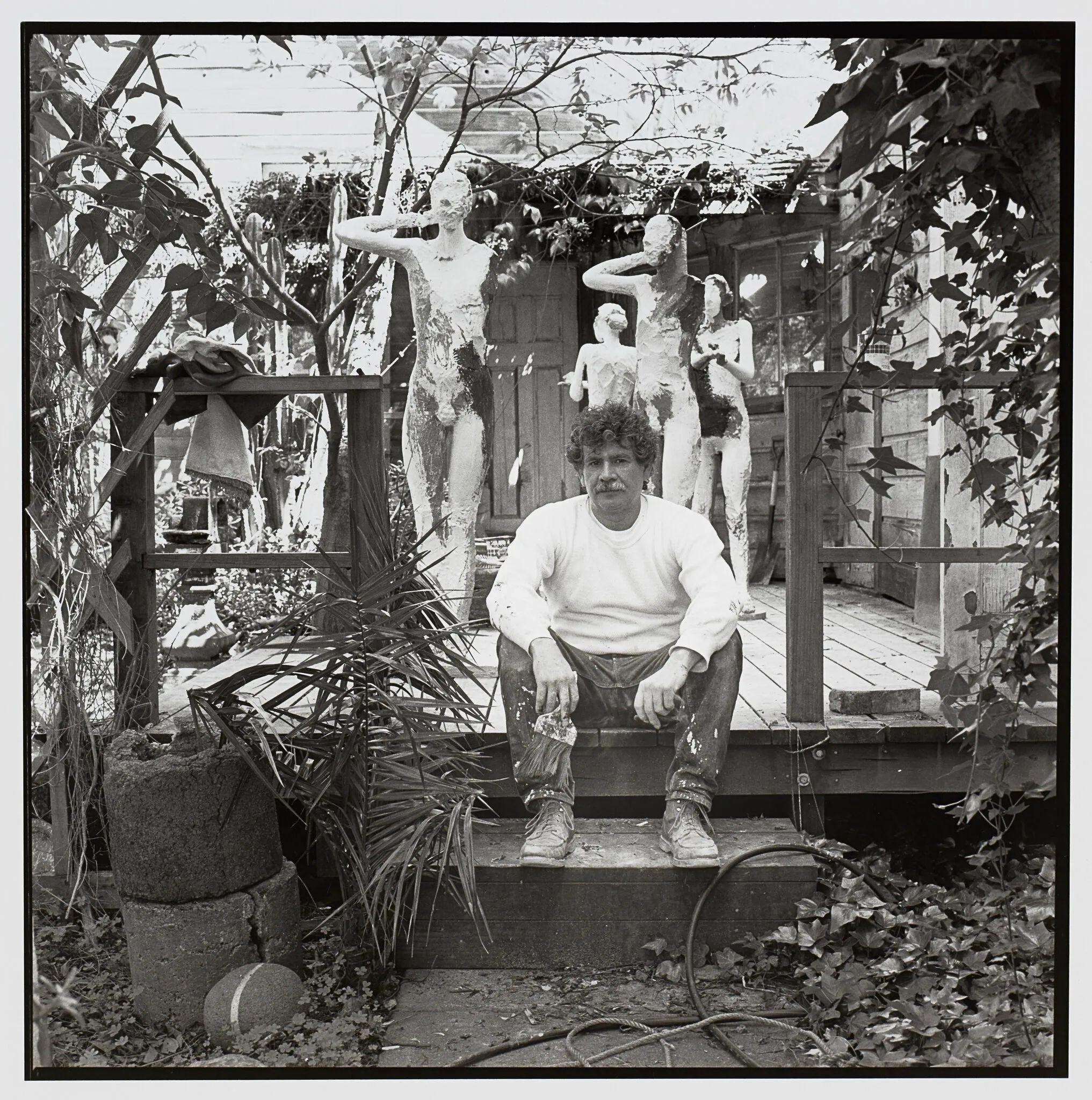
Manuel Neri was one of the defining figures of the Bay Area Figurative Movement, a sculptor whose devotion to the human form spanned more than six decades. Born in Sanger, California, to Mexican immigrant parents who fled political upheaval following the Revolution, Neri spent his childhood in California's agricultural valleys before discovering his artistic calling at San Francisco City College through a ceramics course with Peter Voulkos. This encounter redirected his trajectory from electrical engineering toward a lifelong engagement with form, material, and the expressive potential of the body.
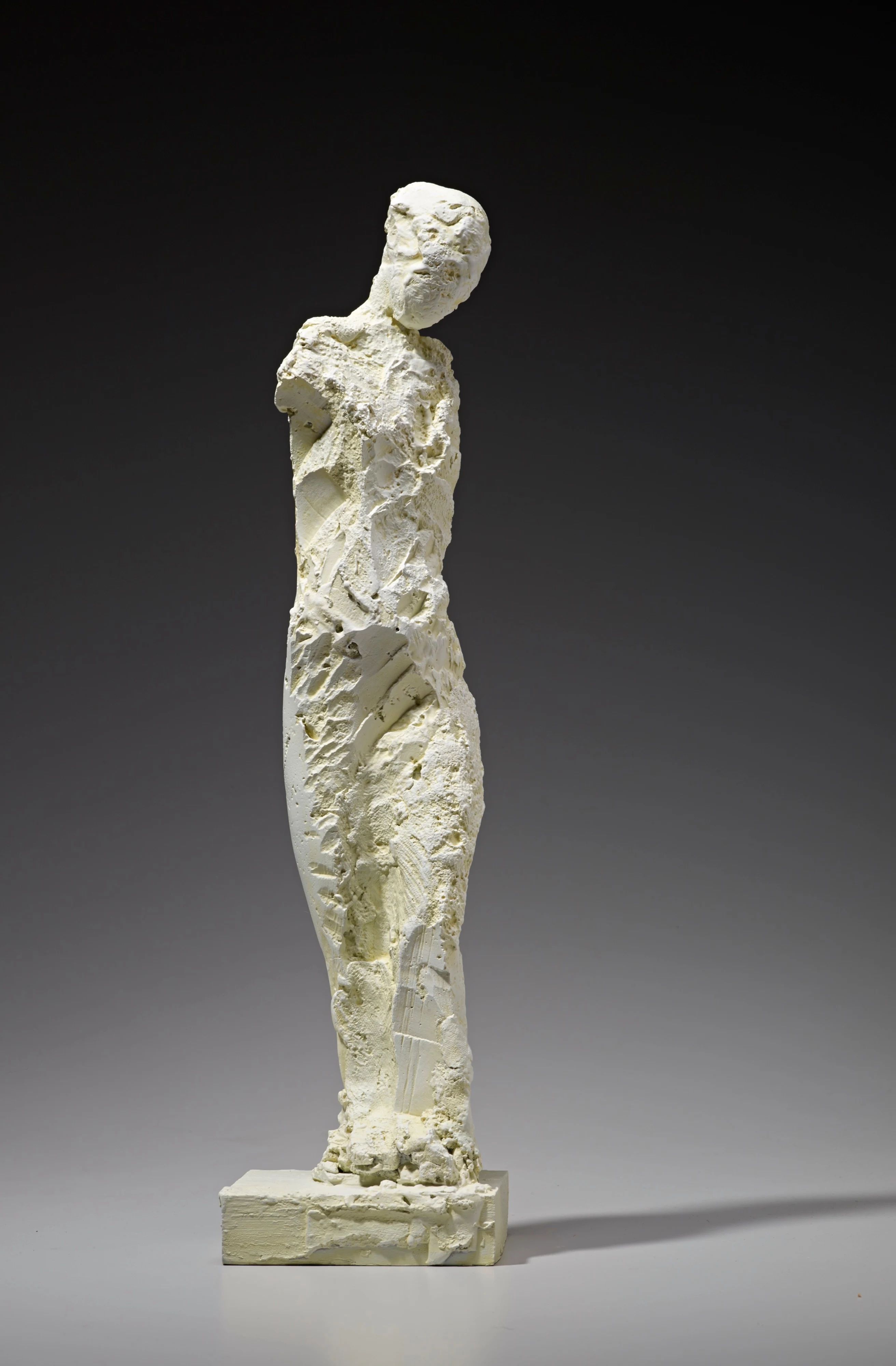
After military service, Neri enrolled at California College of Arts and Crafts and the California School of Fine Arts (now San Francisco Art Institute), where he studied under Richard Diebenkorn, Elmer Bischoff, and Frank Lobdell. In an era dominated by Abstract Expressionism, Neri's commitment to figuration was a deliberate act of resistance. He abandoned ceramics for plaster, drawn to its malleability and immediacy, building up and carving away in response to impulse and intuition. His signature life-sized figures emerged from this process: rough-hewn, painted surfaces that registered every mark, scrape, and gesture as a record of their making.
Neri was deeply embedded in San Francisco's postwar avant-garde. A director of the Six Gallery cooperative, he helped organize the legendary October 1955 reading where Allen Ginsberg first performed "Howl." His marriage to painter Joan Brown from 1962 to 1966 marked an intensely collaborative period, though their artistic dialogue began years earlier and continued long after their separation. Throughout the 1960s and beyond, Neri's work bridged painting and sculpture, his plaster and bronze figures serving as three-dimensional canvases for color that emphasized volume, movement, and emotional charge.
From the late 1970s, Neri expanded his practice to include marble, establishing a studio in Carrara, Italy, where he carved monumental figures and torsos directly from stone. These works retained the raw energy of his plaster sculptures while engaging classical traditions of figurative carving—an act of translation that honored both ancient precedent and contemporary expression. Whether working in plaster, bronze, marble, or on paper, Neri treated the female form not as subject but as architecture: a structure through which to explore weight, balance, fragmentation, and presence.
Neri taught at California School of Fine Arts and UC Berkeley before joining the faculty at UC Davis from 1965 to 1990, where he influenced generations of artists. His work is held in major collections including the Metropolitan Museum of Art, Hirshhorn Museum and Sculpture Garden, San Francisco Museum of Modern Art, and Whitney Museum of American Art. He received numerous honors including a Guggenheim Fellowship (1979), National Endowment for the Arts grant (1980), and the International Sculpture Center's Lifetime Achievement Award (2006). Manuel Neri died in Sacramento in 2021, leaving behind a body of work that insists on the enduring power of the figure to carry meaning, history, and the traces of the hand that made it.
Press
Galerie Magazine